Why a “Second Brain” Product Is Actually a Cross-Border Ops Playbook
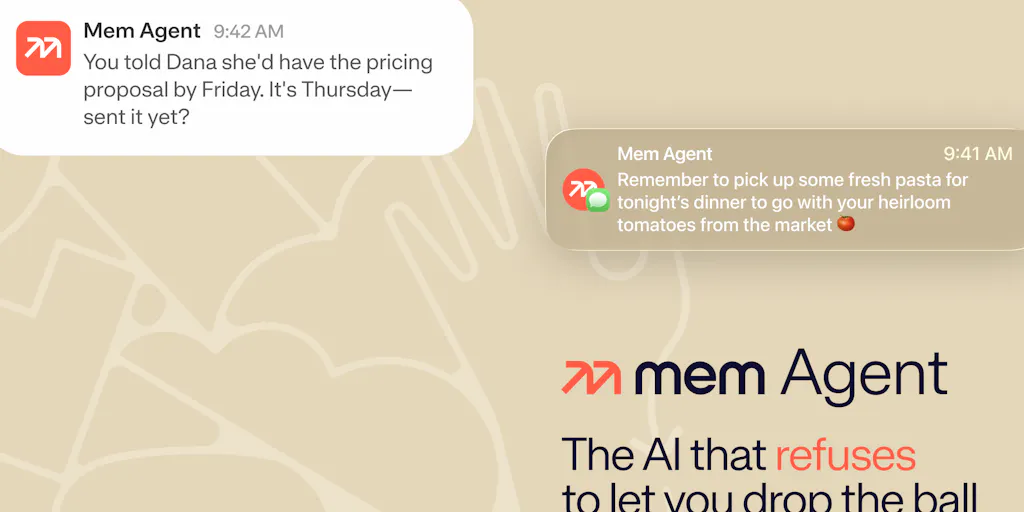
Every cross-border seller I know runs the same silent failure mode: the operation scales, but the operator’s head doesn’t. You’re juggling Amazon PPC changes from Tuesday, a TikTok Shop compliance email that arrived at 2 a.m., a supplier quote in your WhatsApp, and a spreadsheet of return-rate anomalies that you know you meant to investigate. The tools are all there — Seller Central, Shopify admin, a dozen SaaS dashboards — but the connective tissue between them is your memory, and your memory is the weakest link in the stack. That’s why I keep a close eye on the “AI notes” category, and why Mem 2.0’s launch of Mem Agent caught my attention. It’s not a note-taking app anymore; it’s a proactive agent that refuses to let you drop a ball. For an operator drowning in fragmented context, that’s not a productivity nicety — that’s a competitive advantage. The question is whether it’s mature enough to trust with the balls that actually pay the bills.
The Problem It Actually Solves: Context, Not Capture
We’ve been sold “capture” for a decade. Evernote, Notion, Obsidian — the pitch was always the same: dump everything in, and you’ll find it later. But the dirty secret of every second-brain system is that the finding part breaks. You build folders, then you outgrow the folders. You tag, then you forget your own tagging scheme. You search, and the exact keyword you need is buried under a note you wrote in a hurry at 3 a.m. after a supplier call. The reviewers on the Product Hunt launch page keep circling the same word: low-friction. They praise AI-assisted search, chat, and autotagging because those features remove the maintenance tax. One reviewer, Jeltsen Peeters, put it better than any marketing copy: she was drawn to Mem because it allowed her to capture anything “in a very natural and non-intrusive way” without spending hours building folders that would inevitably stop working.
What Mem Agent adds is the next logical step: it doesn’t just store your thoughts; it acts on them. The founder’s launch post describes the core loop: dump in meeting notes, brain dumps, files, or voice memos; the agent folds that into an evolving model of your work; then it nudges you at the right time — no due dates, no alarms. The killer line for me was the early user feedback: “I have stopped keeping a visible task list.” Think about what that means for a cross-border operator. Your task list is currently scattered across Trello, your email flags, a sticky note on your monitor, and the chat thread with your VA. Mem Agent is trying to become the single layer that absorbs all of that and decides when to surface it.
For a seller, the “problem” isn’t note-taking. The problem is that every product launch, every ad campaign tweak, every supplier negotiation has a context — the why, the constraints, the follow-up thread — that dies the moment you switch tabs. Mem Agent’s value proposition is that it keeps those threads alive. One reviewer, Frode F-J, described exactly this: after a trip, Mem kept multiple active threads together — a doctor’s appointment, a car warranty issue, a roof inspection — and brought them back into view at useful moments. That’s not a to-do list. That’s a chief of staff that remembers why something matters, not just when it’s due.
How It Differs From the Incumbents: Opinionated vs. Configurable
The comparison that matters for us isn’t Mem vs. Notion or Obsidian — those are just file cabinets with better search. The comparison is Mem Agent vs. the AI assistant stack we’re already trying to bolt together: ChatGPT for drafting, Claude for analysis, some task manager for follow-ups, and a prayer that nothing falls through the cracks.
Mem’s differentiation is that it’s opinionated. The founder explicitly says they wrote it a “charter” — a set of behaviors it’s not allowed to give up — so it works on day one without you having to prompt, configure, and piece together skills. That’s the opposite of the current trend where every AI tool wants you to build a custom GPT or chain a dozen automations. For a seller who doesn’t have a dedicated ops engineer, that’s a real difference. The reviewer Andreas Vlach noted he could teach Mem Agent his own way of working through explicit instructions and routines, but the key is that it starts working before you teach it anything.
The second difference is “receipts.” The Agent Overlay lets you see exactly what tasks, projects, and goals it’s tracking. That’s a trust feature. We’ve all been burned by AI tools that confidently tell you they’ve “handled” something when they haven’t. Mem’s transparency — showing you its internal state — is the right instinct for an agent that’s supposed to be persistent. It’s also a useful mental model for any seller evaluating AI tooling: can you audit what the AI thinks it’s doing?
Third, the connected-apps approach is smarter than it looks. When you connect Gmail, Mem uses it as context to skip reminders for things you’ve already handled. That’s the difference between an agent and a nagging alarm. A nagging alarm tells you to follow up on the email you already replied to. An agent checks your sent folder, sees the reply, and stays quiet. That’s the kind of “fewer obsolete reminders” that actually reduces cognitive load — and for a seller drowning in supplier emails and customer service threads, fewer false alarms is worth paying for.
Why Amazon Sellers Should Care More Than Shopify Ones
If you’re a DTC brand on Shopify, your ops are probably more structured — you have a CRM, an email platform, a helpdesk. The context lives in tools that talk to each other. But an Amazon FBA seller lives in a different reality: a significant chunk of your critical context lives in unstructured form — Seller Central performance notifications, supplier WhatsApp messages, a spreadsheet of PPC keywords, and the voice memo you recorded while driving about a listing optimization idea. Amazon’s ecosystem is notoriously closed; your data is scattered across Seller Central, third-party tools, and your own head. Mem’s Product Hunt page shows reviewers using it for client management, household logistics, and health data — but the use case that jumps out to me is the seller who needs to track a dozen open threads: “waiting on supplier quote for packaging redesign,” “follow up on removal order that’s stuck,” “check if the new listing got indexed.” That’s not a job for a CRM. That’s a job for an agent that holds context and nudges you at the right time. Shopify sellers have more tools that already do this; Amazon sellers are more likely to be running on sticky notes and hope.
What Cross-Border Sellers Can Borrow (Even If You Don’t Buy Mem)
The most valuable thing in this launch isn’t the product — it’s the operating principle. Mem Agent is essentially a “follow-through engine” that separates the what from the when. The founder’s framing is that you shouldn’t have to set due dates; the agent should figure out the right time based on context. That’s a philosophy you can steal for your own operations, regardless of what tool you use.
Here’s the practical translation for a cross-border operator:
Stop managing tasks, start managing context. Every open thread in your business has a why and a next action. Instead of a to-do list that says “follow up with supplier,” create a context note that says: “Supplier X, quote for 5k units of the new silicone mold, was supposed to come back Tuesday, they’re usually slow after Chinese New Year, alternative is Supplier Y who quoted 8% higher but is faster.” When you have the context attached to the task, the when becomes obvious. You don’t need a reminder; you need the right information at the right moment.
Use AI as a cross-checking layer, not a source of truth. One reviewer, Andreas Vlach, described using Claude as a cross-checking layer for sources Mem can’t access directly — Granola, Recall, Evernote. He’d have Claude compare what those tools contain with Mem’s records and surface discrepancies. That’s a brilliant pattern for sellers: your Amazon data lives in Helium 10, your ads data in a spreadsheet, your emails in Gmail. Pick an AI tool (ChatGPT, Claude, or Mem itself) and use it weekly to reconcile: “Compare my open PPC campaigns list with my notes from last week’s optimization session. What did I say I’d test that I haven’t?” That’s a 10-minute audit that catches 90% of dropped balls.
Voice capture is the killer feature for field ops. Multiple reviewers rave about voice input. Jeltsen Peeters described recording a voice memo on a walk and trusting Mem to process it. For a seller who’s inspecting a warehouse, walking a trade show floor, or driving between meetings, the ability to brain-dump verbally and have it structured later is huge. The limitation noted by Frode F-J — that transcription languages are still limited — is a real constraint for non-English speakers, but for English-first ops, this is the fastest way to get thoughts out of your head and into a system.
The “charter” concept is worth copying. Mem’s founders wrote a set of non-negotiable behaviors for the agent. You can do the same for your own operations: “I never let a supplier quote go unanswered for more than 48 hours. I always check the return rate before reordering. I never approve a new ad creative without looking at the last three campaigns.” Write these down. Feed them to any AI assistant you use. That’s your personal charter, and it’ll make any tool more effective.
Where the Math Breaks: Pricing and Limits
Let’s be honest about the friction. The Product Hunt reviews repeatedly mention price and note limits as drawbacks. One reviewer explicitly called the launch price “ever so slightly steep” for casual users, and another noted the annual discount as a con (which usually means the monthly price is high enough that the discount feels like a necessary pressure tactic). The founder’s post offers a 7-day free trial of the Proactive plan and a code DROPTHEBALL for 50% off the first month — but for a tool that’s supposed to be your always-on memory, a note limit is a structural problem. If you’re dumping supplier emails, meeting transcripts, and voice memos daily, you’ll hit limits fast. That’s the classic SaaS tension: the tool is most valuable when you use it a lot, but the pricing model punishes heavy usage.
For a cross-border seller, the math only works if Mem Agent replaces other tools. If it replaces your task manager, your note app, and part of your email follow-up, then $20–$30/month is cheap. If it’s another subscription on top of your existing stack, it’s a luxury. The reviewers who love it are the ones who consolidated — they stopped using Todoist, they stopped maintaining Notion, they stopped keeping a visible task list. The ones who are lukewarm are the ones who see it as a nice-to-have on top of their existing chaos.
The Missing Features That Matter for Ops
Two gaps stand out from the reviews. First, the lack of OCR and Android support is a dealbreaker for a lot of international operators. A huge percentage of cross-border sellers are on Android — it’s the dominant OS in most manufacturing countries, and it’s common among budget-conscious founders. If you can’t capture a screenshot of a supplier’s price list or scan a shipping label into Mem, you’re losing a core use case. Second, the language limitation on transcription is a real problem for anyone dealing with Chinese suppliers, Spanish-speaking warehouse staff, or any non-English meeting. The workaround mentioned by one reviewer — using Claude to import transcripts — is clever but adds friction. If Mem wants to be the “shared brain” for global operators, it needs to handle the languages those operators actually work in.
Where My Judgment Says It Falls Short
I’m skeptical of the “persistent as hell” claim. The founder promises Mem “won’t let an important thread go cold — not on its watch — unless you tell it to.” That’s a bold promise, and it’s the hardest thing to get right in AI. The danger is the opposite failure mode: an agent that’s too persistent becomes a nag, and you start ignoring it. The “skip reminders for things you’ve already handled” feature is meant to solve that, but it only works if the connected apps give it enough context. For a seller whose follow-ups happen across WhatsApp, WeChat, and email, Mem’s Gmail integration won’t see the WeChat reply. The agent will nudge you about a supplier quote you already negotiated — and you’ll learn to ignore it. Trust is the whole game, and it’s fragile.
There’s also a structural risk in making an AI agent your only task list. The reviewers who love it have clearly invested time in teaching it their routines. But what happens when you hit the note limit and have to purge? What happens when the company changes its pricing model? What happens if the AI misinterprets a context and drops a ball that mattered? The one thing a second brain must never do is forget. Mem’s “receipts” feature helps, but it’s still a young product. For a cross-border seller, where a missed follow-up can mean a lost shipment or a compliance fine, I’d want a fallback — a weekly export, a summary email, something that doesn’t live only inside Mem.
What I’d Watch / Test Next
If you’re intrigued, here’s my suggested 7-day experiment, using the free trial and the DROPTHEBALL code:
- Pick one workstream only. Don’t try to move your whole life into Mem. Choose the messiest operational thread you have — maybe it’s the supplier onboarding for a new product, or the follow-up list for a delayed shipment. Dump everything related to that thread into Mem: emails, voice memos, screenshots, notes.
- Test the “nudge” feature. Don’t set any due dates. Just tell Mem roughly when something matters (“this should be resolved before the end of the month”) and see if it pings you at a useful time. The test is whether the nudge arrives with context — “you’re waiting on the quote from Supplier X, and you noted they’re slow after CNY” — or just a generic “follow up.”
- Do a weekly audit. At the end of the week, open the Agent Overlay and check whether the tasks it’s tracking match reality. Did it miss anything? Did it invent anything? This is the trust-building phase.
- Test the export/fallback. Before you commit, figure out how to get your data out of Mem. If you can’t export cleanly, that’s a red flag for a tool that’s supposed to be your memory.
The bigger takeaway isn’t about Mem specifically — it’s about the shift from capture to follow-through. The next generation of AI tools for sellers won’t just store information; they’ll act on it. Mem Agent is an early, opinionated bet on that future. It’s not ready to run your entire Amazon operation, and the pricing and language limits are real. But the operating principle — an agent that holds context, decides when to nudge, and shows its work — is exactly what every cross-border operator needs. Test that principle this week, with Mem or with a manual system you build yourself. The tool that wins your trust will be the one that never lets you drop a ball.