The “Friction-as-a-Feature” Playbook: What a $9.99 App Blocker Taught Me About Retention Mechanics
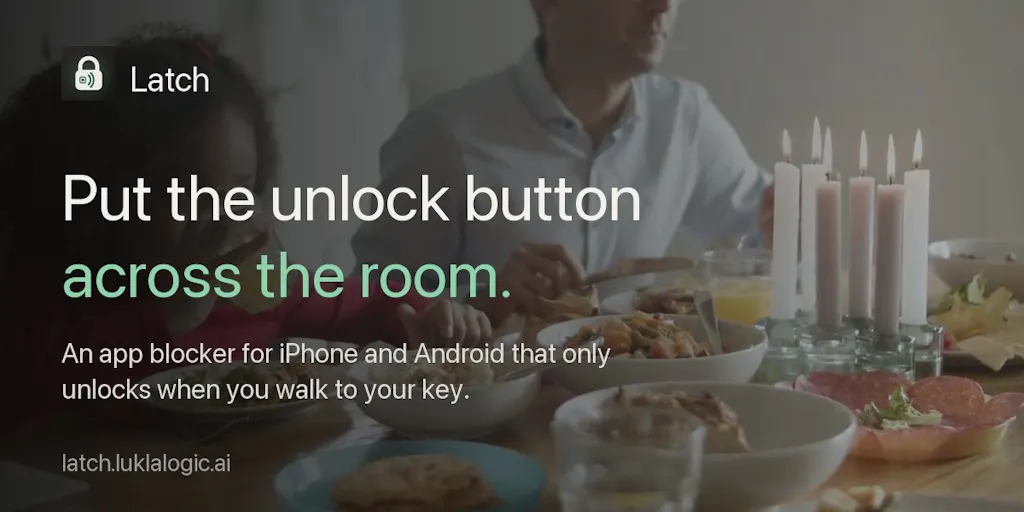
Most cross-border operators I talk to are chasing the same thing: less friction in the funnel. Faster checkout, one-tap login, fewer form fields, shorter PDPs. And that’s correct — for acquisition. But the products that actually hold onto users and hold onto margin are usually the ones that deliberately add friction at the right moment. That’s why a tiny launch called Latch caught my attention this week — not because I need help staying off Instagram, but because the maker’s core insight (“Screen Time limits never worked for me because I could tap past them in a second. What worked was distance”) is a product design principle that translates directly to subscriptions, loyalty loops, and even fulfillment promises in cross-border DTC. Let me unpack what’s actually being sold here, where it sits against incumbents, and what an Amazon FBA brand owner or Shopify operator should steal from it.
What Latch Actually Solves — and Why “Distance” Is the Product
Strip away the launch-page framing and Latch is a commitment device. You pick the apps you want to block, and the way back in is to physically scan a key — any cheap NFC sticker, a printed QR code, or a set number of steps. The maker, Sudarshan, is explicit that the mechanism is the moat: the unlock lives in your kitchen, your car, your office, so the decision to open the app requires leaving your seat. That’s not a feature. That’s a behavioral design choice, and it’s the entire value proposition.
The pricing model is the second interesting thing. Pro is $9.99 and never renews — a one-time unlock, not a subscription. There’s no account, no analytics, no ads, and on iPhone the blocked apps are hidden from Latch itself by Apple’s Screen Time layer. There’s also a “break glass” escape hatch: three emergency unlocks a month, after which it re-locks on its own. The app ships on iPhone, iPad, and Android.
For a cross-border seller, the relevant question isn’t “does this block Instagram.” It’s: what does a one-time-purchase, no-account, privacy-first utility tell us about how modern consumers are pricing trust? More on that below.
Why Amazon sellers should care more than Shopify ones
Shopify DTC brands live and die on email/SMS capture and repeat purchase — a no-account product is anathema to them, because the account is the retention asset. Amazon FBA sellers, by contrast, operate in a world where Amazon owns the customer relationship anyway. A tool that promises “no account, no analytics, no ads” is essentially the Amazon-native value proposition: give me money, get utility, don’t ask me to register. If you’re building a companion app or a post-purchase tool for an FBA brand, the Latch model — pay once, zero data collection, works offline — is a credible positioning against the Klaviyo-fication of everything.
How It Stacks Up Against the Incumbents
The Product Hunt commenter Adrian Knoll asked the obvious question: “Many of those apps/solutions already exist. What’s unique about Latch?” Fair. The category is crowded — Opal, one sec, Freedom, Cold Turkey, and Apple’s own built-in Screen Time all compete for the same attention-management budget. So where does Latch actually differentiate?
Three places, and only three:
- The unlock mechanism is physical, not digital. Opal and one sec rely on in-app friction (breathing exercises, delays, session timers). Latch relies on physical distance. That’s a meaningfully different behavioral bet — and it’s the one the maker validated on himself.
- The pricing is anti-subscription. Freedom and Opal are subscription-first. A one-time $9.99 with no renewal is a direct attack on subscription fatigue, which is a real and growing consumer sentiment in 2025.
- The privacy posture is absolute. No account, no analytics, no ads, and on iOS the blocked-app list is hidden even from the app itself. That’s a stronger claim than most competitors make.
What it does not differentiate on: cross-device sync, accountability partners, usage dashboards, or family controls. If you need those, Latch isn’t your tool.
Where the math breaks
Here’s my honest read: the one-time $9.99 model is great for the user and terrible for the maker’s LTV. There’s no expansion revenue, no upsell path, and no recurring justification for continued development. The “free Pro while codes last” Product Hunt promotion is a classic launch-day growth hack, but it also signals that the paid funnel isn’t yet proven. For an operator, the lesson is the inverse: if you’re going to charge once, you’d better be selling a discrete outcome, not an ongoing relationship. Latch sells “get off your phone” as a one-time behavioral intervention. That works for a utility. It does not work for a SaaS.
What Cross-Border Sellers Can Borrow From This
This is the section I’d actually bookmark. Four transferable mechanics:
1. Friction as a premium feature. Every DTC operator is obsessed with removing steps from checkout. But consider the post-purchase moment: unboxing, registration, first-use. Brands that add a deliberate ritual — a QR code that opens a setup guide, a physical card that asks you to scan before activating a warranty — see higher engagement than brands that auto-register everything. Latch’s NFC-sticker unlock is the same psychology: the physical act creates commitment.
2. One-time pricing as a trust signal. In a market where every tool wants $19/month forever, “$9.99 and never renews” reads as confidence. If you sell a physical product with a digital companion (a smart tag, a fitness accessory, a pet tracker), a one-time unlock for the app is a legitimate differentiator against subscription-fatigued buyers — especially in EU markets where recurring billing disclosure rules have gotten stricter.
3. Privacy as positioning, not compliance. “No account, no analytics, no ads” is a marketing line, but it’s also an operational constraint. For cross-border sellers shipping into GDPR-heavy markets, a product that collects nothing is dramatically easier to launch and defend than one that collects everything. That’s a real cost saving disguised as a feature.
4. The escape hatch as retention insurance. Latch’s three-emergency-unlocks-per-month is a masterclass in managing churn anxiety. Users don’t cancel because they feel trapped; they stay because they know there’s a release valve. Translate that to subscriptions: a clearly communicated “pause” or “skip” option often reduces involuntary churn more than a discount does.
The “steps as a key” question — and why it matters for hardware-adjacent brands
Commenter Neeraj Nathany asked the sharpest product question on the page: if you use step count as your unlock key, do steps walked earlier in the day count, or only steps after you try to open a blocked app? The maker didn’t answer in the scrape. That ambiguity is instructive. Any time you tie a digital unlock to a physical-world signal — steps, NFC, QR, geofence — you inherit edge cases. For sellers building hardware-plus-app bundles, this is the failure mode to design against: what happens when the physical key is lost, the sensor misfires, or the user is offline? Commenter Adam Petritsis asked exactly that about a lost NFC sticker — can you pair a new one without being unlocked first? If the answer is no, you’ve built a lockout trap. If the answer is yes, you’ve built a security hole. There’s no clean middle.
Where My Judgment Says It Falls Short
I’ll be blunt: Latch is a well-executed personal project, not a category-defining product. Three concerns.
First, the moat is thin. Physical-distance unlocking is clever, but it’s not defensible. Any competitor can ship NFC-sticker unlocking in a sprint. The real moat would be a network of pre-paired stickers sold as hardware — and there’s no indication Latch is doing that.
Second, the Android story is unclear. The maker emphasizes that on iPhone, Apple’s Screen Time hides blocked apps even from Latch. That’s a privacy win but also a capability ceiling — it means Latch can’t offer the richer usage analytics that Opal and Freedom use to justify their subscriptions. On Android, the API surface is different, and the launch page doesn’t detail how the experience differs. For a cross-border audience, Android matters enormously — it’s the majority OS in India, Brazil, Southeast Asia, and much of Eastern Europe.
Third, the one-time price caps the roadmap. $9.99 once, no account, no analytics — that’s a beautiful user experience and a brutal business model. I’d expect either a pivot to a hardware bundle (sell the NFC stickers) or a quiet shift to a freemium subscription within 12 months. Watch for it.
A sidebar on the “free Pro while codes last” tactic
The free Pro code promotion is worth studying as a launch mechanic. It converts Product Hunt upvotes into activated users, creates urgency, and — critically — generates a cohort of users who will hit the “break glass” limit and feel the product’s constraints. That’s a smart way to force real usage data without an analytics SDK. If you’re launching a tool on Product Hunt as a lead-gen play for a broader brand, steal this: give away the paid tier for a limited window, but make the free tier’s limits visible enough that users experience the upgrade trigger.
What I’d Watch / Test Next
Three concrete things an operator can do this week.
One: If you sell any product with a companion app, audit your onboarding for removable friction. Where are you auto-registering users who’d actually engage more with a deliberate scan-or-tap ritual? Test a QR-code activation card in your next unboxing run and measure 7-day app retention against your control.
Two: If you’re subscription-first, steal the break-glass mechanic. Add a clearly labeled “pause for 30 days” or “skip this month” option to your Recharge or Stay.ai flow and measure involuntary churn before and after. My prediction: the pause option reduces cancellations more than a 20% discount does.
Three: Watch Latch’s pricing over the next two quarters. If the maker introduces a hardware SKU (sold stickers) or a subscription tier, that’s your signal that one-time pricing doesn’t sustain a software product — and a reminder that “pay once” is a positioning choice, not a business model. For cross-border sellers entering the EU, also keep an eye on how no-account, no-analytics tools fare under the Digital Services Act transparency obligations — “we collect nothing” is a strong compliance story, but you still have to prove it.
The broader takeaway: the next wave of defensible DTC and marketplace tooling won’t come from removing more steps. It’ll come from designing the right friction — physical, temporal, or social — and charging once for the privilege. Latch is a small, imperfect proof of that thesis. The operators who internalize it early will be the ones whose retention curves don’t look like everyone else’s.


