Why a Confetti App Matters More to a Seller in Shenzhen Than a Developer in San Francisco
We spend our working lives staring at dashboards that are designed by accountants, not by humans. Amazon Seller Central gives you a flat line of gray numbers. Shopify’s admin panel treats a $10,000 day with the same visual weight as a $10 day. TikTok Shop’s analytics are a firehose of noise where the signal—your first viral hit, your first repeat customer, your first five-figure day—gets buried under graphs you have to squint at. The entire cross-border e-commerce tooling stack is built to optimize, not to celebrate. We are all, in effect, lonely operators staring at spreadsheets, waiting for a win that never feels like a win. So when a small macOS utility called Joy showed up on Product Hunt promising digital confetti every time something good happens, my first thought wasn’t “cute.” My first thought was: this is the missing layer in every seller’s operations stack. We have tools for everything except the one thing that keeps us going: the feeling that the work matters. And for a cross-border seller juggling three marketplaces, two warehouses, and a supplier who only replies on WeChat, that feeling is in dangerously short supply.
The Problem: Your Dashboard Is Gaslighting You
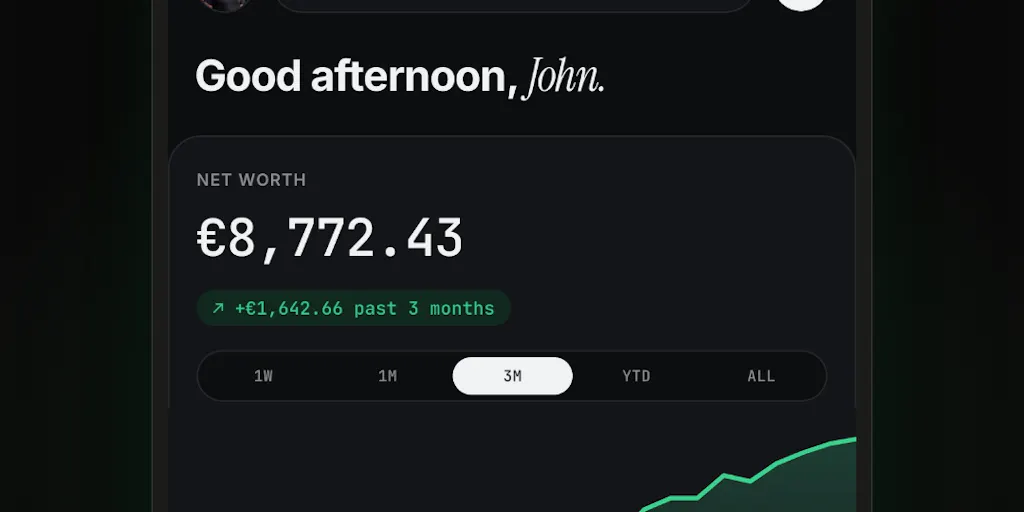
The pitch from Jawahar Selvaraj, the solo builder behind Joy, is disarmingly simple. He built it because “working on an indie product can feel surprisingly quiet.” The first sale, a download milestone, a new GitHub star—these represent hours of work, yet they’re “usually hidden inside dashboards.” He wanted them to feel like real wins. The app is a native macOS menu bar utility that watches for those milestones and “celebrates them instantly by throwing beautiful confetti on the screen.” It’s designed to stay out of the way, to avoid becoming another analytics dashboard, and to focus on one thing: making progress feel rewarding.
For a seller, this describes a psychological trap we all know intimately. The daily routine of checking Seller Central is a study in emotional flatlining. You refresh the page, see your sales numbers, and your brain registers the data without registering the meaning. A $2,000 day in a niche where you’ve been grinding for eighteen months is, to the algorithm, just another data point. But to you, it’s the payoff for a hundred rejected product samples, three failed ad campaigns, and a supplier negotiation that nearly gave you an ulcer. The dashboard doesn’t know that. The dashboard doesn’t care.
Joy’s core insight is that our tools have optimized away the emotional feedback loop. We’ve built dashboards that are functionally excellent and psychologically barren. The product isn’t trying to be a better analytics tool; it’s trying to be a better human tool. It’s a layer of meaning on top of the raw data. And that’s a concept that translates directly from a solo developer celebrating a Stripe payment to a brand owner celebrating a first repeat purchase on Amazon.
Why Amazon sellers should care more than Shopify ones
Shopify sellers have a slight advantage here because the platform’s ecosystem is built around a more celebratory culture—think of all those “I made my first sale!” tweets with screenshots of the admin panel. Amazon, by contrast, is a cold, institutional machine. The Seller Central interface is designed for compliance, not for joy. There’s no confetti when you win the Buy Box. There’s no fanfare when your listing finally breaks into the top 10 for a keyword you’ve been chasing for six months. Amazon’s entire design language says: “You are a supplier in our system, and here are your metrics.” It’s dehumanizing, and it’s a major contributor to seller burnout. A tool like Joy, if it ever expands beyond its current integrations, could be the antidote to that institutional coldness.
How Joy Differs From the Incumbents (And Why That Matters)
The obvious comparison is to the analytics platforms we already pay for. Helium 10, Jungle Scout, and even Google Analytics all do the heavy lifting of tracking, measuring, and reporting. They are indispensable, but they are also joyless. They answer “what happened?” but never “should I feel good about this?” Joy isn’t trying to replace those tools—it’s trying to sit on top of them and change your emotional response to their output.
The difference is one of design philosophy. Helium 10 is a command center. It’s built for analysis, for finding inefficiencies, for optimizing ad spend. Joy is built for celebration. It’s not a dashboard; it’s a cheerleader. The developer explicitly says it “avoids becoming another analytics dashboard.” That’s a deliberate product decision, and it’s the right one. The last thing the market needs is another chart. What the market needs is a reason to keep looking at the charts.
There’s also a comparison to be made with the gamification layer that some platforms have tried to bolt on. Klaviyo has some nice email automation, but it doesn’t throw you a party when you hit a revenue milestone. Shopify has a “success” page after you make a sale, but it’s a fleeting moment. Joy’s approach is persistent—it lives in your menu bar, always watching, ready to celebrate. That’s a fundamentally different engagement model. It’s not a reward you have to go find; it’s a reward that finds you.
The “Wall of Wins” as a retention tool
The inclusion of a “lightweight Wall of Wins” is the sleeper feature here. In a cross-border context, this is pure gold. When you’re managing a brand across Amazon, TikTok Shop, and eBay, your wins are scattered across a dozen different portals. Your best day on Amazon might coincide with a terrible day on TikTok Shop. The Wall of Wins gives you a single, curated place to see the good stuff, stripped of the context of the bad stuff. It’s a psychological survival tool. It lets you end the week feeling like you accomplished something, even if the aggregate numbers were flat.
What Cross-Border Sellers Can Borrow From This (Without Installing It)
Let’s be honest: a macOS menu bar app is a niche tool. Most sellers are running on Windows or are glued to a browser-based workflow. And Joy’s current integrations—likely focused on developer tools like Stripe and GitHub—aren’t directly relevant to a seller checking FBA inventory levels. But the philosophy of the tool is transferable, and that’s where the real value lies.
The first thing to borrow is the concept of a “win threshold.” Joy lets you customize what gets celebrated and how often. You don’t want confetti for every single sale; you want it for the milestones that matter. For a seller, this translates to defining your own celebration criteria. It’s not about celebrating a $50 day; it’s about celebrating the day you hit $1,000 in a new marketplace, or the day your return rate drops below 2%, or the day you finally get that Temu listing approved after three rejections. Define those moments in advance, write them down, and treat them as actual events.
The second thing to borrow is the “Wall of Wins” concept. You don’t need an app for this. A simple spreadsheet, a Notion page, or even a whiteboard in your office will do. The act of writing down your wins, separate from your losses, is a powerful psychological tool. It forces you to recognize progress that your dashboard is hiding. If you’re a solo operator or a small team, this is the difference between feeling like you’re drowning and feeling like you’re swimming.
The third thing to borrow is the idea of making celebration automatic. The problem with manual celebration is that you’re often too tired or too stressed to do it. You hit a milestone and immediately think about the next problem. Joy automates the celebration, which means you actually experience it. For a seller, this could mean setting up automated email alerts for key metrics that go to a separate “wins” inbox, or using Zapier to send a Slack message to your team when a specific revenue threshold is crossed. The point is to remove the friction between the achievement and the recognition of the achievement.
Where the math breaks
The honest assessment is that Joy, in its current form, is not a cross-border seller tool. It’s a developer tool. The integrations—Stripe sales, Docker pulls, GitHub stars—are the language of the indie hacker, not the language of the FBA seller. If you’re running a seven-figure brand, this app isn’t going to move the needle on your operations. The value is purely in the concept, not in the execution for your specific use case.
There’s also a question of scale. A celebration app works when you have a few meaningful milestones a day. But if you’re doing 500 orders a day, confetti would be a constant distraction. The developer’s instinct to let you customize “how often it happens” is smart, but it’s a band-aid. The real challenge is that, at scale, wins become noise. The tool would need to be much smarter about what constitutes a “meaningful” win, which is a hard AI problem that this first version doesn’t even attempt to solve.
My Judgment: A Lovely Idea, A Niche Execution
I want to be clear that I think Joy is a good product for what it is. It’s well-designed, it’s focused, and it solves a real problem for its target audience. The developer’s instinct to avoid building “another analytics dashboard” is exactly right. The problem is that the target audience is narrow, and the cross-border e-commerce application is metaphorical rather than practical.
What I’d like to see, and what I think would be genuinely disruptive, is a version of this concept built for the seller stack. Imagine a tool that watches your Amazon Seller Central account and throws confetti when you win the Buy Box on a key ASIN, or when your TikTok Shop video crosses a million views, or when your Etsy shop gets its first five-star review. That tool would be worth paying for. It would be the emotional layer that the entire industry is missing.
Until that tool exists, sellers should steal the idea. The cost of implementing a “wins” ritual is zero. The benefit is a measurable improvement in morale, which directly impacts the quality of your decision-making. A burned-out seller makes bad calls. A seller who feels like they’re winning makes bold, smart calls.
What I’d Watch / Test Next
Here’s what I’d do this week, no matter what marketplace you’re on:
- Set up your own Wall of Wins. Open a Notion page or a Google Doc. Every Friday, write down three things that went well, no matter how small. It could be a keyword ranking improvement, a positive review, or a supplier that shipped early. Do this for four weeks and watch how your attitude shifts.
- Define your confetti thresholds. Write down the five numbers that, if they happen, genuinely mean your business has leveled up. It could be “first $5,000 day on TikTok Shop” or “first 100 orders in a single week on Amazon.” Write them down and put them somewhere you can see them. The act of naming them makes them real.
- Automate your celebrations. Set up a Zapier or Make automation that sends a notification to your phone or your team’s Slack channel when a key metric hits a certain threshold. It doesn’t have to be confetti; a simple “We did it” message is enough to break the monotony.
- Watch the Joy roadmap. If the developer expands integrations beyond the dev tools, this could become something interesting for sellers. Keep an eye on the Product Hunt page and see where it goes.
The tools we use shape how we feel about our work. The cross-border e-commerce industry has spent the last decade building tools for efficiency and zero tools for morale. Joy is a reminder that the two are not mutually exclusive. You can optimize and still celebrate. You can be data-driven and still feel joy. The sellers who figure that out will be the ones who last.