The Transcript Trap: Why Cross-Border Sellers Keep Losing Money in Meetings Nobody Records Properly
Every cross-border operator I know has the same quiet leak: the supplier call where a factory agrees to absorb the tooling cost, the 3PL rep who verbally commits to a new returns SLA, the affiliate manager who promises a TikTok Shop bundle at a better commission. None of it lands in a CRM. It lands in someone’s head, a half-finished Notion doc, or a voice memo nobody reopens. When the dispute surfaces six weeks later, you have no paper trail. That’s the actual problem Jottoo is attacking — not “AI note-taking,” but the gap between what gets said on a call and what gets tracked as a deliverable. For sellers running supplier negotiations across time zones, that gap is expensive.
What Jottoo Actually Solves (and What It Refuses to Be)
The maker, Fady Sharobeem, is blunt about his motivation: he was tired of AI note-takers that either require a bot to join your call or hand you a transcript and call it done. His framing is that he wanted to walk out of a client meeting knowing exactly what he promised, by when, and to whom.
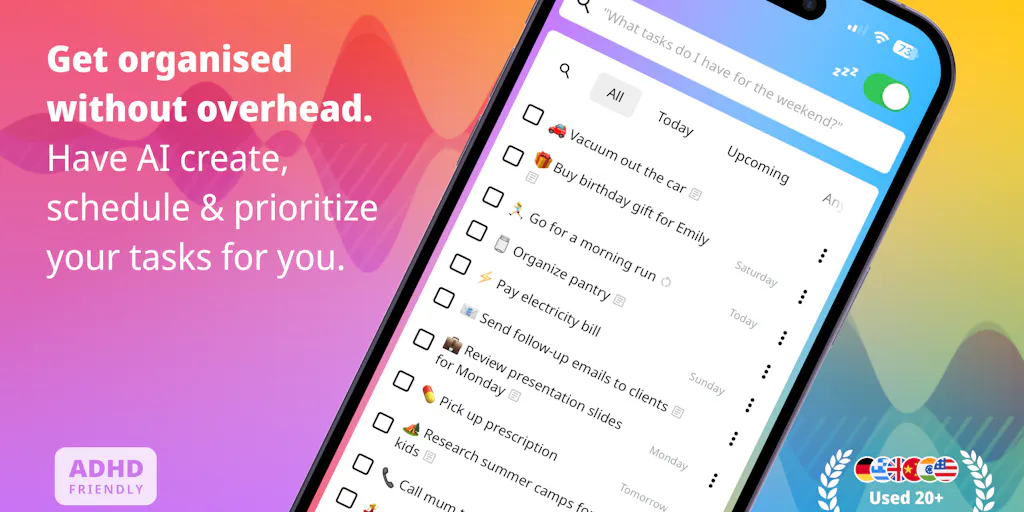
That’s a narrower product than it first sounds. Jottoo records a meeting — or accepts an upload, or your typed notes — and turns it into organised, deadline-tracked tasks rather than a summary you have to re-read. Everything gets organised into folders by client or project. You can ask it to draft a follow-up email or organise a CRM post about the meeting you just had.
The positioning decisions matter more than the feature list:
- No bot joins your call. This is the single most important architectural choice, and it’s the one that makes Jottoo viable for seller-side conversations where you’re on a WeChat or WhatsApp call with a factory, or a Google Meet with a US retail buyer who will absolutely notice a random participant named “Jottoo Notetaker.”
- Individual professionals, not teams. Consultants, sales reps, personal assistants. Explicitly not a team collaboration platform.
- One flat plan, all features included: $13.99/month, no upsells.
- iOS and Android are in closed beta, with the maker offering one month of full access in exchange for testing and feedback.
If you’re benchmarking this against Otter.ai, Fireflies.ai, or Fathom, the differentiator isn’t transcription quality — it’s that Jottoo treats the task as the output and the transcript as raw material. Most incumbents do the opposite and let you bolt on action items as an afterthought.
Why Amazon sellers should care more than Shopify ones
Here’s my read: a Shopify DTC brand owner’s most valuable meetings are internal — creative reviews, media buying standups, retention planning. Those happen in tools that already have decent native recording and the participants are on your payroll, so accountability is enforced by the org chart.
An Amazon FBA brand owner’s most valuable meetings are external and adversarial-adjacent: supplier price negotiations, inspection agent debriefs, Amazon Seller Central case escalations with an account manager, freight forwarder quotes. The counterparty has zero incentive to help you remember what they agreed to. A bot that joins the call is a non-starter in half those contexts. A tool that works off a phone recording or a typed recap is genuinely useful.
The same logic applies to TikTok Shop affiliate managers negotiating commission tiers and to Temu or SHEIN supply-side conversations where the relationship is asymmetric and the paper trail is thin.
The Integration Gap Is the Whole Ballgame
Scroll the comment thread and a pattern emerges fast. Paweł Moszkowicz asks whether it integrates with Linear so tasks can be created there. The maker’s answer: “At this stage, there is no integration but keen to hear the ideal workflow you are having in mind.”
Ill Robyn asks about syncing tracked tasks with calendars or project management apps. The answer: there’s a calendar page inside the app, and the maker is “considering building a native integration with Microsoft and Apple calendar.”
Germán Merlo asks about Asana. No answer in the thread.
And David Moniz raises the platform question that should worry anyone running a lean ops stack: does it work from a web dashboard, or do you need to download an app? Does it work on Linux? He notes that other AI meeting note apps failed him on Linux.
This is where my judgment gets less generous. A task-tracking tool that doesn’t push tasks into the system where you actually work is a task-tracking tool you’ll stop opening by week three. For a cross-border seller, “where you actually work” is almost never a standalone app — it’s Slack, Notion, ClickUp, Asana, Linear, or a Google Sheet that a VA maintains. Jottoo’s current answer is essentially “the tasks live in Jottoo.” That’s a real ceiling.
Where the math breaks
Run the unit economics of the $13.99/month plan against a realistic seller workflow and the value is obvious if — and only if — you’re doing high-stakes external calls weekly. One recovered supplier concession worth $500 pays for three years of the subscription. But if your meetings are mostly internal and your team already lives in ClickUp, you’re paying $168/year for a second inbox you’ll resent.
The flat pricing is refreshingly honest, and I’d rather see this than a “free tier that caps you at 5 meetings” funnel. But flat pricing on an AI product with per-minute transcription and inference costs is a margin bet. At scale, heavy users subsidised by light users only works if the heavy-user cohort stays small. Watch whether that plan survives contact with real usage.
The memory question nobody answered cleanly
Muhammad Ahmed asked the sharpest question in the thread: what’s the extent of search when you “ask Jottoo anything about a previous meeting,” and is there a limit on how far back its memory goes?
The maker’s answer: “At this stage Ask Jottoo is available within a meeting or note. I am looking to add Ask Jottoo across smart folders so you focus your questions on specific customer or project.”
Read that carefully. The cross-meeting, cross-document query — the feature that would make this a genuine institutional memory for a supplier relationship — is roadmap, not shipping. Right now you can interrogate one meeting. You can’t yet ask “what has this factory committed to on lead times over the last eight months,” which is exactly the question a seller with a slipping production schedule needs answered.
Amelia captured the genuine appeal well — turning meeting notes directly into tracked tasks, with the flexibility to record, update, or type notes without a bot in the room. That flexibility is the product’s best asset. It’s also currently doing more work than the intelligence layer behind it.
What Cross-Border Sellers Should Borrow From This
Strip away the product and there’s a playbook here that any operator can steal this quarter, regardless of whether they ever install Jottoo.
Kill the bot. If you’re running supplier or marketplace calls on Zoom or Google Meet, stop sending a notetaker bot. Counterparties in Shenzhen, Guangzhou, and Ho Chi Minh City read a bot in the room as a signal that you’re building a legal record — which changes what they’re willing to say informally. Record on your phone, upload after. You get the same transcript without poisoning the negotiation.
Make the deliverable the unit, not the meeting. Most seller teams archive recordings nobody watches. Flip it: every external call should end with a written list of who owes what by when. Whether that’s Jottoo, a VA with a template, or a Zapier chain into your PM tool is secondary. The discipline is the point.
Route tasks into the system of record. This is the step almost everyone skips. A task that lives in a meeting-notes app is a task that doesn’t exist. For Amazon sellers, that usually means your ops board; for DTC operators, your Klaviyo or retention calendar if it’s a marketing commitment, or your 3PL ticket queue if it’s a fulfillment commitment.
Use it for the calls you currently don’t document at all. The affiliate manager call, the Etsy or eBay account rep call, the freight forwarder quote call. These are the ones with the worst paper trails and the highest dispute rate.
What I’d Watch / Test Next
Three concrete things I’d do this week if I ran a seller team.
First, pick your single highest-stakes recurring external call — most likely your top supplier or your 3PL — and run it through Jottoo’s beta for a month. The maker is offering one month of full access in exchange for feedback, and the closed beta for iOS and Android is the cheapest way to find out whether task extraction survives contact with a real, messy, accented, cross-timezone conversation. Test it specifically on a call where the counterparty speaks English as a second language; that’s where transcription-to-task pipelines historically fall apart.
Second, before you commit, map your output destination. If your team lives in ClickUp or Asana, treat the missing integrations as a hard blocker and tell the maker directly what you need — he’s explicitly asking for the ideal workflow. If your team is small enough that a standalone task list is fine, the integration gap is survivable.
Third, pressure-test the memory limitation. Ask Jottoo a question that spans two meetings on the same supplier. If it can’t answer, decide whether single-meeting extraction alone justifies $13.99/month for you. For some operators it will. For anyone trying to build institutional memory across a supplier base, it won’t — yet.