Why a Sound-Composition Tool Belongs in Your Cross-Border Playbook
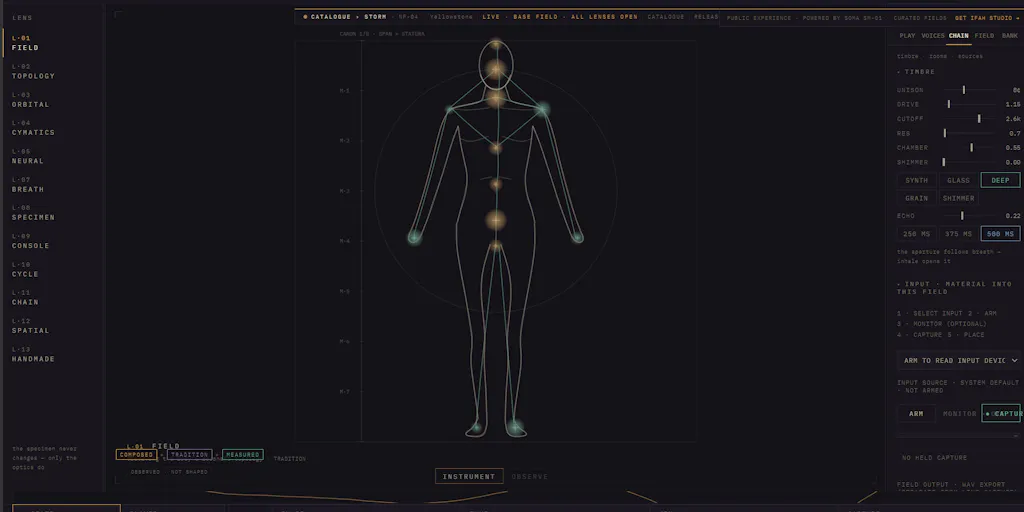
Every quarter, I scan Product Hunt for tools that whisper something about where consumer expectations are heading, not just what’s trending in ad creatives. Most launches are incremental — a new analytics dashboard, another AI copywriter. But every so often, one forces me to rethink a category entirely. IFAH, a new software instrument for composing sound as an environment rather than as tracks, is that kind of launch. For cross-border sellers, this matters more than it seems. We spend fortunes optimizing product listings, conversion rates, and logistics, but we largely ignore the auditory dimension of the customer experience — the unboxing, the in-store ambiance, the product itself. If sound is becoming a composable environment, then the brands that learn to design it will own a sensory advantage that competitors can’t easily copy. This essay breaks down what IFAH actually does, how it differs from the tools you already know, and what you can steal from its philosophy this week.
The Problem IFAH Actually Solves: Sound as a Material, Not a File
The Composer’s Trap and the Seller’s Blind Spot
The maker’s opening statement on the Product Hunt launch page frames the core tension perfectly: “most tools are designed either to produce music or to measure sound.” That gap is real, and it’s not just a niche concern for avant-garde composers. Think about your own operation. You likely use tools like Klaviyo to sequence email flows, Helium 10 to mine keywords, and Shopify to build storefronts. But what do you use to design the sound of your brand? Probably nothing. You might have a logo sting or a background track on your website, but that’s about it. The problem is that sound is treated as a file — an MP3 you upload, a track you license, a notification you record. It’s a static asset, not a living material.
IFAH challenges that by asking what happens if we treat sound as an environment we can deliberately compose. For a cross-border seller, this reframing is gold. Your customers don’t experience your product in a vacuum. They experience it in their homes, in their cars, in their offices — surrounded by ambient noise, their own playlists, and the sounds of their daily lives. If you can start thinking of sound as a space you can shape, rather than a file you attach, you open up new possibilities for brand differentiation. Imagine a skincare brand that doesn’t just sell a moisturizer but also composes a “morning ritual” soundscape that customers can play while applying the product. That’s not a gimmick; that’s a retention loop.
The Instrument vs. The Measurement Tool
The maker describes IFAH as “an instrument for the territory in between” music production and acoustic measurement. That’s a significant distinction. Existing tools fall into two camps. On one side, you have digital audio workstations (DAWs) like Ableton Live or Logic Pro, which are powerful but require a steep learning curve and are built for song structure — bars, beats, and arrangement. On the other side, you have acoustic measurement tools like Room EQ Wizard or even smartphone apps that measure decibel levels and frequency responses. These are analytical, not creative. IFAH sits in the middle: it’s a software instrument you can experience first, then compose with, then preserve and reproduce. That’s a fundamentally different workflow.
For sellers, this matters because it suggests a new category of product: one that is experiential before it is functional. In cross-border e-commerce, we often lead with features and spec sheets. But the most successful DTC brands lead with feeling. If IFAH can make sound composition accessible to non-musicians — and the launch page suggests it’s designed for “creation, practice, performance, learning and research” — then the barrier to entry for branded audio drops significantly. You don’t need to hire a composer; you need to learn a new tool.
How IFAH Differs from Existing Options: A Side-by-Side
The Incumbent Landscape
Let’s be honest: the market for sound tools is crowded. You have Splice for royalty-free samples, Artlist for licensed music, and Epidemic Sound for content creators. All of these are essentially libraries — you browse, you download, you attach. They don’t ask you to think about sound as a space. IFAH is different because it’s generative and compositional. The maker’s question — “what happens if we stop treating sound only as content, songs, tracks, files and start treating it as an environment we can deliberately compose?” — positions it against the entire library model. Instead of searching for the perfect track, you build the environment yourself.
This is a meaningful shift for cross-border sellers who produce video ads. Most of us default to a generic upbeat track from a library because it’s cheap and fast. But that approach results in ads that sound like every other ad. With a tool like IFAH, you could theoretically generate a unique sonic identity for your brand — something that doesn’t exist anywhere else because you composed it. That’s a competitive advantage in a marketplace where Amazon Seller Central listings all start to blur together.
The Comparison to Generative AI Tools
You might argue that AI tools like Mubert or Soundraw already generate unique tracks. True, but they generate music — structured songs with beats and melodies. IFAH’s ambition is broader: it’s about composing environments, not just tracks. That includes ambient soundscapes, acoustic experiences, and possibly interactive audio that responds to the listener. The maker mentions “reproducible acoustic experiences,” which suggests a focus on consistency — something that matters for brands. If you’re launching a product in multiple markets, you need your sound to be consistent across TikTok Shop videos, Amazon listings, and your own Shopify site. IFAH’s approach to reproducibility could be the key to maintaining that consistency.
Why Amazon Sellers Should Care More Than Shopify Ones
Here’s a contrarian take: Amazon sellers should be more excited about IFAH than Shopify store owners. Why? Because Amazon is a constrained environment. You have limited control over the customer experience — no custom fonts, no unique layouts, no branded unboxing unless you pay for it. Sound is one of the few sensory dimensions you can actually control, and most sellers ignore it entirely. A product listing with a video that includes a custom-composed soundscape can stand out in a sea of generic demos. On Shopify, you can already control everything visually, so sound is a nice-to-have. On Amazon, sound is a differentiator.
Moreover, consider the rise of audio reviews and voice shopping. As Alexa and other voice assistants become more integrated into shopping behavior, the sound of your brand — the tone of your product’s voice, the ambient audio in your demo videos — will become part of the purchase decision. Sellers who start experimenting with IFAH now will have a head start when voice commerce becomes mainstream.
What Cross-Border Sellers Can Borrow from IFAH’s Philosophy
The “Environment First” Approach to Product Design
The most valuable lesson from IFAH isn’t the tool itself; it’s the mindset. The maker asks, “what exists between music, acoustics, perception and the spaces we inhabit?” That’s a question about context. For cross-border sellers, the equivalent question is: what exists between your product, your packaging, your marketing, and the spaces your customers inhabit? Most of us think about these as separate silos. We design a product, then we design packaging, then we shoot ads. But the best brands treat the entire experience as one environment.
Take Dyson as an example. They don’t just sell vacuums; they sell a feeling of clean, controlled air. Their product sound — the hum of the motor — is part of that environment. If you’re selling a physical product, you should be thinking about how it sounds when used, not just how it looks. IFAH’s philosophy of treating sound as an environment you can deliberately compose applies directly to product design. Can you make your product sound more premium? Can you design a packaging that makes a satisfying “thunk” when it closes? These are the details that drive word-of-mouth.
The “Experience First, Analyze Later” Workflow
IFAH’s workflow is described as “experience first, compose with, preserve, reproduce and eventually examine.” That’s a radical inversion of how we typically approach marketing. We usually analyze first (market research, competitor analysis, keyword research) and then create. But the “experience first” approach suggests that you should start with a feeling or a sensory impression and then work backward to the strategy. For a DTC brand, this could mean prototyping a brand sound before you finalize your visual identity. It could mean recording a customer’s unboxing experience and using that audio to inform your packaging design.
This is particularly relevant for cross-border sellers who are expanding into new markets. Sound preferences vary wildly by culture. A soundscape that feels calming in Japan might feel eerie in Brazil. By adopting an “experience first” approach, you can test sonic environments before you commit to a full market entry. You can’t do that with a traditional music library.
Where the Math Breaks: The Practical Limits of IFAH
Let’s be clear: IFAH is not going to replace your ad agency or your music licensing budget. The launch page mentions “software instruments and reproducible acoustic experiences,” but it doesn’t disclose pricing, system requirements, or a release date for a full version. The product is clearly in its early stages — the maker calls it “the beginning of that exploration.” For a cross-border seller, this means it’s not yet a turnkey solution. You’re not going to plug IFAH into your Amazon Seller Central workflow and get a branded soundscape by Friday. This is a tool for experimentation, not for production at scale.
Additionally, the focus on “acoustic experiences” suggests a hardware component or at least a calibrated listening environment. If that’s the case, the cost of entry could be significant. For a small DTC brand, investing in specialized audio equipment might not be the best use of capital. You’re better off starting with a simple Zoom recorder and a free DAW like Audacity to experiment with sound design before you invest in IFAH.
My Judgment: Where IFAH Falls Short (and Where It Could Win)
The Niche Problem
IFAH’s biggest challenge is that it’s solving a problem most people don’t know they have. The maker’s question is intellectually compelling, but it’s not a pain point for the average cross-border seller. We’re not composers; we’re operators. We care about conversion rates, return on ad spend, and customer lifetime value. A tool that asks us to rethink our relationship with sound is a hard sell when we’re already juggling Meta Ads Manager and Google Merchant Center. IFAH needs to bridge the gap between artistic exploration and practical application — perhaps by offering presets or templates for common use cases like “retail ambient” or “product demo underscore.”
The Missing Business Layer
The launch page is entirely focused on the creative and philosophical aspects of the tool. There’s no mention of licensing, commercial use, or integration with existing production pipelines. For a cross-border seller, that’s a red flag. If I compose a soundscape with IFAH, can I use it in a TikTok Shop ad? Can I license it to a client? What are the rights? These questions need answers before I can recommend it to anyone running a serious operation. The maker needs to add a business layer — clear licensing terms, export options, and perhaps a marketplace where brands can commission soundscapes from IFAH composers.
The Opportunity: A New Category of “Brand Audio”
Despite these shortcomings, I see a massive opportunity. If IFAH can establish itself as the go-to tool for “brand audio” — the sonic equivalent of a logo — it could become as essential as Canva is for visual design. The market is ready for this. We’ve seen the rise of audio branding in podcasts and voice assistants, but there’s no dominant tool for creating a cohesive sonic identity. IFAH could fill that gap. For cross-border sellers, this means the ability to create a consistent audio brand across all marketplaces — from Etsy to eBay to Temu — without hiring a professional composer.
What I’d Watch / Test Next
If I were running a cross-border operation, here’s what I’d do this week, based on IFAH’s launch:
Audit your brand’s current sound. Go through your Amazon product videos, your Shopify homepage, and your social media ads. Mute the audio and then unmute it. Is the sound adding to the experience or detracting from it? Most likely, it’s neutral noise. That’s a missed opportunity.
Experiment with generative audio tools. Before you invest in IFAH, try a free tool like Soundraw or Mubert to generate a few unique tracks. See if you can create a “sound logo” — a 2-3 second audio sting that plays at the start of your videos. Use this in your next batch of TikTok Shop creatives and track the difference in engagement.
Follow IFAH’s development closely. The maker is clearly thinking deeply about the relationship between sound and space. Even if the tool isn’t ready for commercial use, the philosophy is sound. Sign up for updates on the Product Hunt page and watch for a beta or early access program. When they add a business layer, be among the first to test it.
Run a sonic A/B test. Pick one product with decent traffic. Create two versions of the demo video: one with a generic library track, one with a custom-composed ambient soundscape (even if you create it in Audacity). Run them as split tests on Meta Ads Manager and compare the click-through rates. You might be surprised by how much sound influences purchase intent.
The bottom line: IFAH is a reminder that the last untapped dimension in e-commerce is audio. While everyone else is competing on price, speed, and visual design, you can carve out a niche by paying attention to what your brand sounds like. Start experimenting now, and you’ll be ahead of the curve when the rest of the market catches on.


