Why a Locked Google Account Should Terrify Every Cross-Border Seller
If you run a serious cross-border operation, your entire business is a house of cards built on someone else’s server. Your Amazon Seller Central credentials, your Shopify storefront, your Klaviyo flows, your ad accounts — all of it sits behind a login that a platform can revoke in a heartbeat. Most sellers I know spend their days obsessing over the wrong risks: chargebacks, customs delays, a bad review cycle. The existential risk is much dumber and much closer. It’s the morning you type your password and get a message that your account doesn’t exist. That’s not a hypothetical. That’s what happened to Kemone Phillips, a former Googler who helped bring Google Workspace to market, and his story is the most important cautionary tale for e-commerce operators this month.
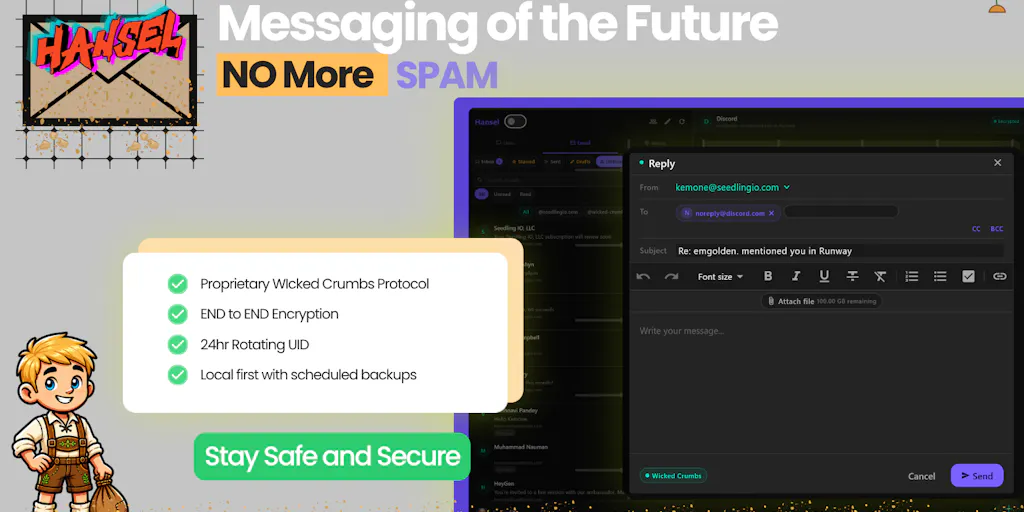
Phillips got locked out of his own Google Workspace subscription with no warning, no meaningful support, and no recourse — losing email, documents, and contacts in an instant. His response wasn’t a support ticket. It was to build Hansel by Seedling, a sovereign communication platform that he and his AI engineering partner Bob shipped in under 30 days. The product is interesting. The lesson is bigger. For any seller who has ever woken up to a suspended Amazon listing or a frozen Shopify Payments reserve, Hansel is a mirror held up to your own dependence. This essay is about what that mirror shows, what you can actually borrow from a DIY email rebellion, and where I think the whole thing falls short of the hype.
The Problem Hansel Actually Solves: Platform Lockout as a Business Risk
Let’s be precise about what happened to Phillips. He didn’t lose a side project. He lost the operational backbone of his professional life. According to his own account on the Product Hunt launch page, Google cancelled his Workspace subscription, suspended his account, and terminated the grace period early. No warning. No support. Just a dead switch. And the cruelty of the timing is that he was on the original team that brought Google Workspace to market. He spent years telling businesses to trust this product. Then the product ate his business.
For cross-border sellers, this is not a distant horror story. It’s a daily operating risk. Think about what happens when an Amazon seller gets flagged for a suspected policy violation. Seller Central can suspend an account with a one-line email, and the appeal process can take weeks. During that time, your FBA inventory is still sitting in warehouses, your PPC campaigns are still burning spend, and your customer service email is bouncing. The platform doesn’t care about your cash flow. The platform cares about its own risk model. That’s the structural reality of selling on someone else’s marketplace. You are a tenant, not an owner.
Hansel’s pitch is that you can be the owner. The product is designed to give you everything Gmail or Outlook provides, but with a critical difference: your email runs on your own server, your messages encrypt on your device before they leave, and no company can lock you out because none of it lives with them. The team built their own cryptographic protocol called Wicked Crumbs, which uses rotating identities and tamper-evident message chains to solve spam at the architecture level. The claim is stark: without your key, a message simply cannot arrive. No company can read your data. No company can cancel your account.
That’s a powerful value proposition for anyone who has felt the cold hand of platform arbitrariness. But let’s be honest about what it is and isn’t. Hansel is not a replacement for Amazon’s marketplace. It’s not going to protect your Seller Central account from a policy bot. What it does is model a different relationship with infrastructure — one where the default assumption is that the platform is not your friend, and where the architecture is built to make betrayal impossible rather than merely unlikely.
Why This Matters More to Amazon Sellers Than Shopify Ones
There’s a hierarchy of platform dependence in cross-border e-commerce, and it’s worth being honest about where the risk concentrates. A Shopify seller owns their storefront in a way an Amazon seller never will. Shopify gives you the code, the checkout, and the hosting, but your customer list, your email flows, and your brand site are portable. You can export your orders, migrate your domain, and rebuild on another platform in a weekend. Painful, but survivable.
Amazon is different. Your entire business is the listing, the review history, the Buy Box placement, and the FBA inventory that’s physically inside Amazon’s warehouses. If Amazon suspends you, you don’t just lose a website. You lose access to your own inventory. You lose the ranking you spent years building. You lose the review velocity that took thousands of orders to accumulate. That’s not a migration problem. That’s a confiscation problem.
This is why I’d argue that Amazon sellers should care more about the Hansel story than Shopify operators. The Shopify crowd can afford to be complacent because their platform relationship is more like a landlord-tenant arrangement with a decent lease. The Amazon crowd is living in a company town. When the company decides you’re a problem, you don’t get a hearing. You get a lockout. Hansel is a reminder that the only real protection is ownership, and that’s a lesson Amazon sellers should internalize even if they never touch the product.
How Hansel Differs From the Incumbents: A New Category or a Niche Rebellion?
The obvious comparison for Hansel is ProtonMail, which has been selling encrypted email with a “we can’t read your data” pitch for over a decade. There’s also Tutanota (now Tuta), which offers end-to-end encrypted email with a more privacy-focused stance. And for the truly paranoid, there’s the self-hosted route with something like Mail-in-a-Box, which gives you full control of your mail server but requires you to actually run it.
Hansel’s differentiation is twofold. First, it’s built for a non-technical audience. Phillips isn’t asking you to configure SPF records or manage DKIM keys. He’s selling a sovereign communication platform that behaves like the mainstream tools you already know, but with the backend re-architected. Second, the Wicked Crumbs protocol is a genuinely different technical approach to the problem. Instead of just encrypting messages in transit and at rest, it uses rotating identities and tamper-evident chains to make the entire system resistant to interception and spam at the protocol level. That’s not a feature. That’s a philosophical stance baked into the infrastructure.
But here’s where I get skeptical. The incumbents have spent years fighting the hardest battle in email: deliverability. When you run your own server and encrypt everything, you are essentially telling the world’s spam filters that your messages are opaque. Gmail’s spam filter doesn’t care about your sovereignty. It cares about whether your messages look like spam. A self-hosted, fully encrypted email server has a terrible reputation score by default. The IP address ranges used by small self-hosters are often already on blocklists because spammers use the same infrastructure.
This is the classic tension in sovereign tech. You can have control, or you can have convenience. You can have privacy, or you can have deliverability. Hansel is betting that the architecture can solve both, and I genuinely hope it does. But the history of encrypted email is littered with products that were technically brilliant and practically unusable because no one received their messages. That’s a risk every cross-border seller should weigh carefully. Your order confirmations, your shipping notifications, your customer service replies — if those emails land in spam, your business is dead even if your inbox is sovereign.
Where the Math Breaks: The Cost of Running Your Own Infrastructure
Let’s talk about the economics of sovereignty, because this is where most sellers will make their decision. Hansel’s pitch is that you own your email, which means no subscription fees, no lockout risk, and no data mining. But ownership has a cost that isn’t always visible in the marketing copy.
When you run your own server, you’re responsible for uptime, security patches, spam filtering, deliverability monitoring, and disaster recovery. That’s a full-time job for an IT professional, or a recurring cost for a managed hosting provider. The math only works if you’re either technical enough to run it yourself or large enough to justify the infrastructure cost. For a solo seller doing $50K a year in revenue, the time spent managing your own email server is time not spent on product research or ad optimization. The opportunity cost is real.
There’s also the question of ecosystem lock-in. Gmail isn’t just email. It’s Google Calendar, Google Drive, Google Meet, and the entire Workspace suite that ties your business processes together. Hansel is launching with Windows support, with macOS and mobile coming soon. That’s a significant gap. A cross-border seller lives on their phone, checking orders at 2 AM and answering customer messages from a warehouse floor. If Hansel doesn’t have a mobile app that works flawlessly, it’s not a replacement. It’s a hobby project.
I’m not saying the math never works. For a seller who’s been burned by a platform suspension, the peace of mind might justify the inconvenience. But let’s be honest about what you’re buying. You’re not buying better email. You’re buying insurance against a specific catastrophic risk. And like all insurance, the premium should be proportional to the actual threat.
What Cross-Border Sellers Can Actually Borrow From Hansel
Here’s the part of this essay where I stop reviewing the product and start extracting lessons. Because even if you never download Hansel, even if you think encrypted email is overkill for your operation, there are three principles from this launch that you should steal and apply to your business this quarter.
First, the architecture of ownership. Hansel’s core insight is that the platform should not have the power to lock you out. That’s a design principle, not just a feature. You can apply the same principle to your e-commerce stack. Do you have your customer email list exported and stored somewhere outside Klaviyo? Do you have your product images and descriptions backed up outside Amazon’s system? Do you have a secondary sales channel that isn’t dependent on the same marketplace? If the answer to any of these is no, you’re one suspension away from starting from zero. The fix isn’t to build your own platform. The fix is to maintain portable copies of everything that matters and to have a documented migration plan.
Second, the value of a contrarian response. When Phillips got locked out, he didn’t write a blog post complaining about Google. He didn’t file a complaint with the FTC. He built a product. That’s the same mindset that separates successful cross-border sellers from the ones who burn out. When Amazon changes a fee structure or TikTok Shop changes a policy, you can complain, or you can adapt. The sellers who thrive are the ones who treat every platform betrayal as a signal to build a new capability for themselves. Hansel is a masterclass in that response.
Third, the power of a narrow, focused launch. Hansel launched on Product Hunt with a clear story, a named problem, and a specific audience. The launch wasn’t trying to be everything to everyone. It was a former Googler telling a story about betrayal and building a solution. That’s exactly how you should approach a new product launch in cross-border e-commerce. Don’t try to sell to everyone. Tell a story that resonates with a specific pain point, and let the audience self-select. The sellers who do this well on Etsy or eBay don’t have the broadest catalogs. They have the clearest narratives.
The Tooling Stack Lesson: AI Partners Are Now Co-Founders
One detail in the Hansel story that shouldn’t be overlooked is that Phillips built the product in under 30 days with his AI engineering partner Bob. That’s not a throwaway line. That’s a signal about how the tooling stack for e-commerce is changing.
A few years ago, building a sovereign email platform would have required a team of engineers, a year of development, and a significant capital raise. Phillips did it in a month with an AI partner. The same dynamic is playing out across the cross-border e-commerce tooling landscape. Tasks that used to require a developer — setting up a custom returns portal, building a landing page for a new product line, writing a scraper for competitor pricing — can now be done by an operator with a clear prompt and a willingness to iterate.
This doesn’t mean the human is obsolete. It means the human’s role has shifted from writing code to directing outcomes. The sellers who embrace this shift will have a massive cost advantage over the ones who still think they need to hire a full-stack engineer for every project. Hansel is proof that the barrier to building your own tools has collapsed. The question is whether you’re going to use that leverage or watch your competitors use it first.
Where My Judgment Says Hansel Falls Short
I’ve been generous with the lessons, so now let me be direct about the weaknesses. Hansel is a product built from a personal wound, and that’s both its strength and its limitation. The strength is authenticity. The limitation is that the founder’s specific pain point — a Google Workspace lockout — is not the same pain point that most cross-border sellers face. Most sellers don’t need sovereign email. They need reliable email that doesn’t land in spam, integrates with their CRM, and works on their phone. Hansel is solving a problem that is real but rare, and that’s a hard place to build a business.
The deliverability question is the one I keep coming back to. If Hansel’s encrypted messages are genuinely unreadable by intermediaries, then Gmail and Outlook cannot filter them for spam. That means they will either be delivered blindly or blocked wholesale. The history of encrypted email suggests the latter is more likely. If your order confirmations are going to spam, your customers will never see them, and your business will suffer in ways that are far worse than the occasional platform lockout.
There’s also the question of network effects. Email is valuable because everyone is on it. Hansel is building a sovereign protocol, which means it only works if the people you communicate with are also using it, or if it can interoperate with the existing email infrastructure. The launch page doesn’t clarify how Hansel handles sending messages to people who are still on Gmail or Outlook. If the answer is “they can’t read your messages,” then Hansel is a closed network, and closed networks don’t win in communication. If the answer is “it interoperates,” then the sovereignty is compromised at the edges. Either way, there’s a tension that the marketing copy doesn’t resolve.
Finally, the launch is early. Windows only, with macOS and mobile coming soon. For a cross-border seller who lives on their phone, that’s a non-starter. I would not make Hansel my primary email platform today. I would watch it, test it on a secondary account, and see how the deliverability and mobile situation evolves. The technology is interesting. The timing is premature.
What I’d Watch / Test Next
If you’re a cross-border operator who read this far, here’s what I’d actually do this week, in concrete terms.
First, audit your own platform dependence. Write down every tool that holds a piece of your business hostage — Amazon Seller Central, Shopify, Klaviyo, your ad accounts, your email provider. For each one, ask: if this account were suspended tomorrow, what would I lose, and how long would it take me to recover? If the answer is “everything” and “forever,” you have a problem. Start exporting your data and building portable backups. This is the real lesson of Hansel, and it costs nothing to implement.
Second, sign up for the Hansel waitlist or download the Windows version to test it on a secondary email account. Don’t make it your primary. Use it for internal team communication or low-stakes correspondence. See how the encryption feels, how the deliverability performs, and whether the mobile experience matters to you. You’re not evaluating whether to switch. You’re evaluating whether the technology has legs.
Third, experiment with an AI partner for one operational task this week. Pick something small — a returns email template, a competitor price tracker, a customer segmentation script — and try to build it with an AI tool instead of hiring a contractor. The point isn’t to replace your team. The point is to build the muscle of shipping your own tools. Hansel was built in 30 days by a founder and an AI. That pace is now table stakes for the best operators.
Fourth, watch the Hansel by Seedling Product Hunt page for updates on the macOS and mobile launches. If they solve the deliverability problem and ship a mobile app, this becomes a genuinely interesting option for sellers who want to own their communication infrastructure. If they stall, you’ve lost nothing but a few minutes of reading.
The takeaway from this launch isn’t that you should abandon Gmail or Amazon. It’s that the platforms you depend on are not your friends, and the only durable strategy is to own your own infrastructure wherever you can. Hansel is a reminder that the tools to do that are getting cheaper and faster every day. The question is whether you’ll use them before the platform flips the switch on you.