The Loneliness of the Long-Distance Seller
If you run a cross-border e-commerce operation — whether a single Shopify store, a handful of Amazon FBA listings, or a growing DTC brand — you know the silence. The P&L spreadsheet doesn’t talk back. The ad dashboard doesn’t ask if you want coffee. And the most grinding part of the job isn’t the competition from Temu or the ever-shifting TikTok Shop algorithm; it’s the fact that most of the actual work — product research, listing optimization, ad copywriting, logístical troubleshooting — happens alone, in a chair, with only your own willpower holding the line between focus and doomscrolling. I’ve been writing about productivity tooling for e-commerce operators for years, and I’ve seen countless apps promise to fix that loneliness. Most of them optimize solo discipline, which is like giving a mariner a better compass when what they need is a crew. That’s why Grindoro caught my attention — not because it’s a Pomodoro timer, but because it reimagines focus as a shared rhythm. And for anyone who has ever stared at a blank Amazon product description page at 2 p.m. wondering why the words won’t come, that shift from solitary timer to global session might be more than a novelty. It might be the missing accountability layer your operation needs.
What Problem Does a Synchronized Timer Actually Solve for an E‑Commerce Operator?
Let me frame it bluntly: most e-commerce tasks suffer from a start-cost problem. You sit down to run a Helium 10 keyword analysis, and the first five minutes are mental friction — pulling up the tool, remembering your workflow, battling the urge to check yesterday’s sales instead. Traditional Pomodoro apps help by slicing that friction into manageable chunks, but they still leave you in a vacuum. Grindoro’s core insight — that focus feels easier when others are doing it at the same time — targets the exact psychological hurdle that a solo operator faces.
The product’s maker, Ilya Shkurko, explains it: “I built Grindoro because I was tired of productivity apps that feel lonely.” That loneliness is a tax on execution. When I’m running a paid acquisition campaign on Amazon or managing a TikTok Shop launch, the hardest part isn’t the tactical work — it’s maintaining the discipline to do it consistently, without external pressure. Grindoro solves for that by anchoring every session to the top of the hour or the half-hour. You don’t start a timer; you join a global cohort of people who are also trying to focus right now.
For an e-commerce operator, this translates into a few concrete benefits:
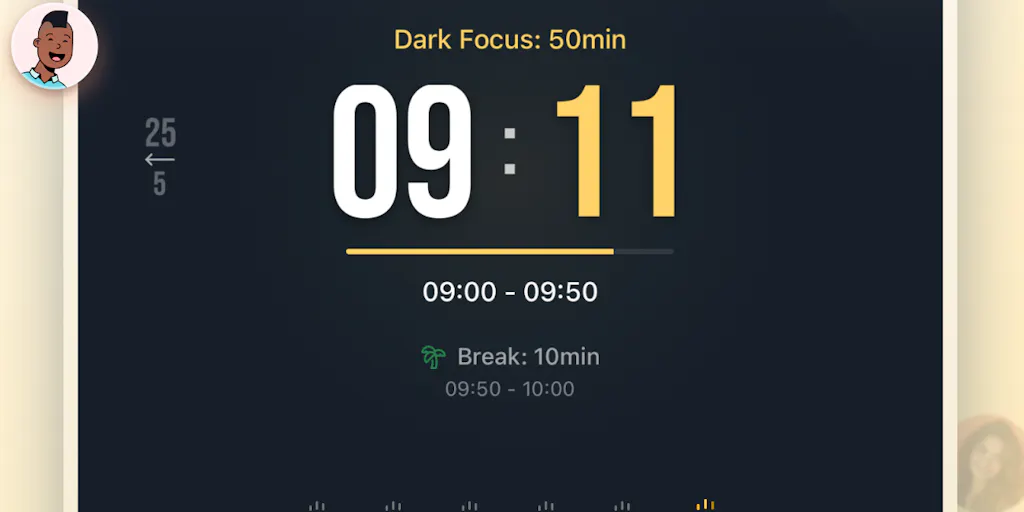
No decision fatigue about when to start. You know the next 25-minute (Light Roast) cycle begins at :00 or :30. You just show up. This is powerful for sellers who batch similar tasks — say, all your keyword research in one block, all your listing optimization in another.
Social proof without chat. The app shows you a lightweight activity feed with other participants’ avatars and what they’re working on, then disappears once you join the session. It’s enough to know you’re not alone, but not enough to become a distraction. For a seller who spends hours alone in Seller Central, that ambient presence can reduce the urge to open five browser tabs out of boredom.
A session budget that forces intentionality. Coffee in Grindoro isn’t cosmetic; it’s a real cap on how many focus sessions you can run before you recharge via the Grind Machine. As Shkurko notes, “I designed it to make each focus session feel intentional, rather than something you start and abandon without thinking.” That’s exactly the mentality needed to move from “I’ll work on it later” to “I’m committing to this 25-minute block.”
How Grindoro Differs from the Tools You’re Already Using
The productivity space for e-commerce sellers is crowded: Forest gamifies focus by growing trees, Focusmate pairs you one-on-one for body doubling, and even tools like Klaviyo lean into workflow automation but don’t address the attention side of the equation. Grindoro sits in a unique intersection: it’s synchronous rather than asynchronous, social rather than private, and structured around fixed start times rather than arbitrary intervals.
The biggest differentiator? No matching algorithm. Focusmate requires you to book a session with a stranger who also wants to focus at the same time — which works but introduces friction (what if the other person cancels? What if your schedules don’t align?). Grindoro’s approach is simpler: everyone joins the same global session at the scheduled start. As Shkurko puts it, “I also don’t want users spending time deciding which room or group to join.” For a seller who might be running a time-sensitive restock or ad optimization, that frictionless onboarding matters.
Another subtle but important difference: Grindoro doesn’t punish you for missing a day. The weekly café collection acts as a “proof of consistency” rather than a streak counter. Most e-commerce sellers I know would admit that they string together three days of intense focus, then crash into a day of reactive customer service and dead inventory. A streak that resets to zero after a missed day is demoralizing. The café mechanic, which snapshots your weekly progress (focused time, sessions, visits), reframes consistency as a collection of weeks rather than a fragile chain. That’s a more forgiving structure for the reality of running a business.
Why Amazon Sellers Should Care More Than Shopify Ones
If you’re purely a DTC operator on Shopify, you might already have a rhythm of batchwork — content calendars, email sequences, creative testing — that benefits from flexible solo sprints. But Amazon sellers operate in a world of time-sensitive windows: PPC bid adjustments during high-traffic hours, inventory replenishment before stockout, lightning deal submissions. Missing a 30-minute window because you procrastinated can cost real revenue. Grindoro’s synchronized sessions, especially the 15-minute Light Roast mode, are tailor-made for these high-stakes, low-decision tasks. You can join a session at :15, run a quick PPC analysis, and be done before the next bid change deadline. The shared rhythm adds accountability without requiring you to coordinate with a team that may not exist.
What Cross‑Border Sellers Can Borrow from Grindoro (Even If You Never Open the App)
I’m not saying every operator should adopt Grindoro wholesale. But the design patterns embedded in this product translate directly to how you structure your own workdays and even how you build your own tooling stack.
1. Gamify your own execution, not just your customers’. Most e-commerce sellers think of gamification only in terms of loyalty programs or referral bonuses. But Grindoro’s XP, boosters for on-time arrivals, and weekly “passport” stamps are a reminder that you can game your own productivity with the same mechanics. If you find yourself slipping on deep work, set up a manual reward system: for every three focused 50-minute sessions (Dark Roast), you unlock a reward — an extra 15-minute break, a piece of content consumption, or even a small business indulgence like upgrading a tool that’s been on your wishlist.
2. Use a “session budget” to prevent burnout. The coffee energy cap is a brilliant constraint. In e-commerce, the temptation is to work until the work is done — which is never, so you grind 12-hour days and then crash. Implementing a hard budget on focused blocks (say, four 25-minute sessions per day before you must recharge) forces you to prioritize. The Grind Machine unlock — where completing sessions can earn unlimited coffee for a day — mirrors the idea of earning a “flow day” after a week of discipline. You could apply this to your own schedule: batch your most demanding tasks into a limited number of daily slots, and when you’ve earned enough “focus XP,” allow yourself a free-form day.
3. Synchronize with a peer group inside your own network. Grindoro’s global rhythm works because of network effects, but you don’t need a global app to replicate it. If you run a small team or have a mastermind group of fellow sellers, pick a common start time (e.g., 9:00 AM EST) and commit to a shared 25-minute session. Use a lightweight tool like a shared Google Calendar event that says “Focus block – no meetings, no Slack.” The accountability of knowing your co-founder or partner is also sitting down to work at the same moment can be just as effective as a global feed of strangers.
Where the Math Breaks
Let’s be honest: Grindoro is a consumer-grade productivity app, not a purpose-built e-commerce tool. Before you integrate it into your workflow, you need to account for its limitations.
Time‑zone friction. The product schedules sessions at the top of the hour and half-hour — a convention that works well if you’re in a time zone aligned with peak global activity (e.g., US/EU hours). But if you’re a seller in Southeast Asia or Australia serving Western markets, your prime working hours might be 9 PM local time. At that hour, the global participant pool may be thinner, reducing the social accountability benefit. The app’s current design doesn’t let you see upcoming session density by time zone, so you may find yourself in a virtual empty café.
No integration with your actual work tools. Grindoro is a standalone timer. It doesn’t connect to Amazon Seller Central, Shopify, Helium 10, or any project management app. That means you can’t automatically log your focused time against a specific SKU or campaign. For an operator who wants to measure how many hours they spend on listing optimization vs. ad management, you’ll need a separate time tracker like Toggl.
The “coffee budget” can feel restrictive. Shkurko designed the cap to make sessions intentional, but if you’re in the middle of a time-sensitive restock or a flash sale, being told you’ve hit your coffee limit is frustrating. Yes, you can unlock unlimited coffee through the Grind Machine, but that adds another layer of gamification on top of an already distracting day. For mission-critical work, you may want an override switch.
Lack of output‑oriented metrics. The app tracks how many sessions you completed, not whether you actually accomplished anything. It’s easy to run five Pomodoro blocks and feel productive while your actual to‑do list — writing product descriptions, fixing a broken Etsy listing — remains untouched. The accountability is about showing up, not about doing the right thing once you’re there. A seller should pair Grindoro with a simple task list or Trello board to ensure the sessions translate to output.
Where the Math Breaks (A Sidebar on the Social Layer)
One of the commenters on the Product Hunt launch asked whether cafés could “shape smaller groups.” Currently, each week’s café is a collectible snapshot, not a persistent room. If Grindoro ever adds micro‑cohorts — say, a café for e‑commerce operators specifically — the social accountability would become far more targeted. But as of today, the global rhythm means your focus buddies are random: a student studying for exams, a freelance writer, a software developer. That ambient presence is still better than solitude, but it lacks the domain‑specific peer pressure of knowing you’re in a session with someone who also needs to hit a Q4 sales target.
What I’d Watch / Test Next
If you’re a cross-border seller curious about structured focus, here’s a concrete three‑step experiment I’d run this week.
Try Grindoro for three days, but only for one specific task category. Choose something you consistently procrastinate on — writing listing copy, auditing PPC keywords, or planning a TikTok Shop ad creative. Schedule your first session at the next :00 or :30. See if knowing that a global room is running alongside you reduces the friction of starting. Track your output: did you finish the task faster than usual?
Combine it with a task‑tracking tool. Use Grindoro for the timer, but before each session, jot down exactly what you’ll accomplish in that 25 or 50 minutes. I recommend Trello or a simple notebook. After the session, mark whether you hit the goal. This turns the app from a vague accountability tool into a performance lever.
Set up a shared focus cadence with a peer. If you’re part of a cross-border seller community — many have Slack or Discord groups — propose a daily 10:00 AM GMT synchronized block. Use Grindoro’s global session, but have a separate text channel for “I’m in a Light Roast, working on my Amazon listing.” The combination of the app’s synchronous timer and your own social reinforcement might be more than the sum of parts.
Longer term, I’d watch whether Grindoro adds integrations or time‑zone dashboards. If the developer ever releases an API or a web widget that can be embedded into a seller’s workspace, the product could become a genuine operational tool rather than just a motivation hack. Until then, it’s a well‑designed companion for the solo operator — but not a replacement for the actual systems (good data, clear priorities, financial discipline) that underpin a profitable cross-border business. Use it for what it is: a shared rhythm that makes the lonely hours a little less lonely. That, for many sellers, might be enough to turn a 3‑hour Wallow into a 25‑minute Grind.