Why a Google Labs Side Project Matters More to Your P&L Than Another Ad Platform
Every quarter, a new AI tool crosses my desk that promises to “revolutionize” e-commerce, and ninety percent of them are just wrappers around an API with a Stripe checkout. So when I saw that Google Labs had quietly shipped a product called Dreambeans — something that reads your personal Google apps and generates daily AI stories — my first instinct was to scroll past. But I didn’t. Because here’s the thing: the most underrated operational lever in cross-border e-commerce right now isn’t a better ad optimizer or a cheaper freight forwarder. It’s the ability to turn the mountain of unstructured data you already own — Gmail threads with suppliers, Docs with SOPs, Calendar invites for listing reviews — into something that actually informs decisions before you make them. Dreambeans is a toy, sure. But it’s a toy that points directly at the gap between the tools we pay for and the intelligence we actually use. For a seller running a $2M–$20M operation across Amazon, Shopify, and TikTok Shop, that gap is where margin leaks.
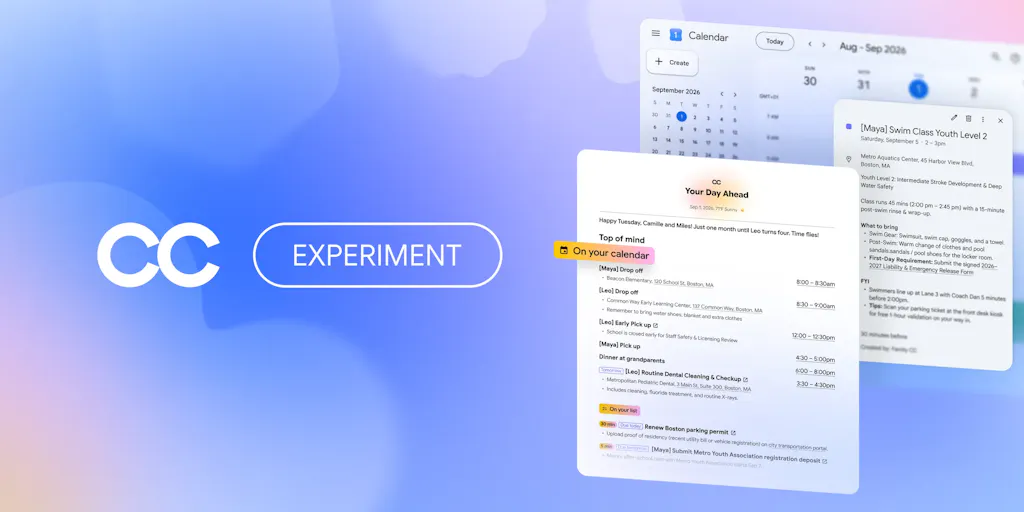
The product itself is simple: Dreambeans by Google Labs generates personalized daily AI stories from your Google apps. It launched on June 7th, 2026, and it’s part of a broader pattern of Google Labs launches that includes Genie 3, a world model, and Google GenTabs in Disco, which remixes your tabs into custom apps. The user reviews are thin — one review, 5.0 stars, from frank_yang, who notes that “the search capability is particularly strong, and it also has Gmail and Docs, which is very practical.” That’s it. No pricing disclosed, no API, no enterprise tier. But the strategic signal isn’t in the feature list — it’s in the direction of travel. Google is teaching its models to live inside your workflow, not just answer queries. And that’s a lesson worth stealing, regardless of which platform you sell on.
The Problem It Actually Solves: Context Overload, Not Search Failure
Let’s be honest about what Dreambeans is solving. Search is not broken. If I need to find a supplier’s payment terms from three months ago, I can search Gmail in seconds. The problem is that I don’t know I need to find it until the moment the PO is already late. The problem is synthesis — the daily act of sitting down and asking “what actually happened yesterday, and what should I do about it?” — which most operators either skip or do poorly.
Dreambeans automates that synthesis. It reads across your Google apps — Gmail, Docs, Calendar — and produces a narrative summary of your day or week. For a solo operator or a small team, that’s genuinely useful. It’s like having a chief of staff who read everything you wrote and wrote down what matters. The review from frank_yang calls out exactly this: “The search capability is particularly strong, and it also has Gmail and Docs, which is very practical.” Practical is the right word. Not revolutionary. Not category-defining. Practical.
For cross-border sellers, the practical use case is obvious. Your Gmail is a mess of supplier quotes, freight forwarder updates, Amazon performance notifications, and customer service escalations. Your Docs contain your SOPs, your product research notes, your launch checklists. Your Calendar is full of listing optimization blocks and ad review slots. Dreambeans — or a tool like it — could give you a daily brief: “Your Shenzhen supplier confirmed the MOQ change, your FBA shipment is delayed by two days, and your TikTok Shop compliance doc was updated.” That’s not a search query. That’s a decision support system.
The reason this matters more than another ad platform is that most sellers don’t have a data problem. They have an attention problem. You can buy all the Helium 10 and Jungle Scout and Klaviyo in the world, but if you’re not looking at the right signal at the right time, you’re just paying for noise. Dreambeans is a bet that the next wave of AI tools will be about filtering and narrating, not just retrieving. And that bet is worth paying attention to.
How It Differs From the Incumbents: The Microsoft and Notion Problem
If you’re a seller who’s been using Microsoft 365 for your backend operations, you already have access to Copilot in Outlook, Word, and Teams. Microsoft has been pushing “AI that summarizes your emails and drafts replies” for over a year now. The difference is that Copilot is bolted onto the productivity suite like an afterthought — it’s a feature, not a product. Dreambeans is structured as a standalone experience, which means Google is thinking about it as a surface, not a plugin.
Then there’s Notion AI, which is the closest analog in the “workspace intelligence” space. Notion AI can answer questions about your docs, generate content, and summarize meeting notes. But Notion’s core value proposition is that you have to build the structure first — the databases, the relations, the templates. If you’re a chaotic operator who lives in Gmail and Calendar, Notion AI is useless to you because you never put your life in Notion. Dreambeans meets you where you already are, which is a fundamentally different approach.
And that’s the key differentiator: the data moat. Dreambeans has access to your entire Google Workspace — your actual email, your actual calendar, your actual documents. Not a siloed notebook you have to remember to maintain. That’s a massive advantage, and it’s why the “search capability is particularly strong” — because the search isn’t just over a database, it’s over your life. No other tool on the market has that kind of privileged access to your operational reality, unless you’ve built a custom integration layer, which almost no one has.
Why Amazon sellers should care more than Shopify ones
Here’s a contrarian take: Dreambeans-style AI is more valuable for an Amazon FBA seller than for a Shopify DTC operator, and the reason is structural. On Shopify, you own the customer relationship, your email list, and your analytics. You can already build a pretty complete picture of your business in one dashboard. On Amazon, your data is fragmented across Seller Central, vendor central, ad console, and a dozen third-party tools. Your Gmail is where the real story lives — the threatening policy violation email, the supplier’s price increase, the customer who emailed you directly because Amazon’s messaging system failed.
An AI that reads your Gmail and synthesizes “here’s what’s at risk today” is worth more to an Amazon seller because the stakes are higher and the signals are more scattered. A Shopify seller can miss a day and not lose their account. An Amazon seller can miss a policy email and wake up to a suspended listing. The asymmetry is real, and it’s why I’d bet on Google’s approach being adopted faster in the marketplace seller community than in the DTC world.
What Cross-Border Sellers Can Borrow From It (Without Waiting for Google)
You don’t need to wait for Dreambeans to be generally available, or for Google to decide whether it’s a real product or a Labs experiment that gets sundowned next to GenTabs. You can steal the core idea — “narrate my operational data daily” — and implement it with tools you already have. Here’s how.
First, set up a daily email digest using Zapier or Make that pulls from your Gmail labels, your Google Calendar, and your Docs, and sends you a single “morning brief” to your phone. It won’t be as elegant as Dreambeans — it’ll be a list, not a narrative — but it gets you 80% of the value. The point isn’t the AI; the point is the habit of starting your day with a synthesized view of what changed, not a raw feed of what arrived.
Second, build a “decision log” in Google Docs — a single document where you or your VA pastes key decisions, supplier changes, and policy updates at the end of each day. Then use the built-in Google Docs AI (or a simple prompt in ChatGPT) to generate a weekly summary from that log. This is the manual version of what Dreambeans does automatically. It’s not as magical, but it’s free, and it forces you to think about what actually mattered, which is the discipline most sellers lack.
Third, and this is the one that will actually move your P&L: apply the same “narrate, don’t search” logic to your ad accounts. Instead of logging into Amazon Ads or TikTok Ads Manager and staring at dashboards, set up a weekly automated report that summarizes performance in plain English. Most ad platforms now have AI-generated insights — use them. The goal is to reduce the time between “something changed” and “I understand what changed.” Dreambeans is a reminder that the future of operational tooling isn’t more charts; it’s better stories.
Where My Judgment Says It Falls Short
Now let me be the skeptic in the room, because that’s the job. Dreambeans has three problems that would keep me from building a business around it, even if it were available at scale.
First, the data privacy question is unresolved. You’re asking Google to read your Gmail, your Docs, and your Calendar — and then generate narratives that might contain sensitive supplier terms, pricing, or even customer PII. For a cross-border seller, that’s a compliance nightmare. If you’re selling in the EU, GDPR applies to how you process personal data, and using a consumer-grade AI tool to summarize customer emails could put you in violation. Google’s privacy policy is not a data processing agreement. Until there’s an enterprise tier with clear data handling commitments, this is a toy for personal use, not a tool for your business.
Second, the signal-to-noise ratio is a real concern. Gmail is full of spam, newsletters, and automated notifications. Docs is full of half-finished drafts and obsolete SOPs. If Dreambeans can’t distinguish between “this email matters” and “this email is a shipping notification from Amazon,” it’s going to generate a daily brief that’s 90% noise. The one review on Product Hunt praises the search capability, but search is the easy part. Summarization with judgment is hard. I’d want to see how it handles a week of 300 emails before I trust its output.
Third, and this is the one that matters most for operators: Dreambeans is a passive tool. It tells you what happened, but it doesn’t tell you what to do. It has no concept of your inventory turns, your ad ACOS targets, or your cash flow constraints. It’s a mirror, not a map. The real value in AI for cross-border e-commerce isn’t in summarizing the past — it’s in prescribing the next action. And Dreambeans, at least in its current form, doesn’t do that. It’s a nice-to-have, not a must-have.
Where the math breaks
Let’s talk about the unit economics of a tool like this. If Dreambeans ever goes paid, what’s it worth? For a solo operator, maybe $10–$20 per month — it saves you 30 minutes a day of digging through email. That’s a no-brainer. But for a team of five or ten, the cost multiplies, and the value doesn’t. The operations manager still needs to read the raw emails to verify the AI’s summary. The founder still needs to see the original supplier quote to negotiate. The AI saves you time, but it doesn’t save you judgment. And judgment is what you’re paying your team for. So the economics of a Dreambeans subscription get worse as your team grows, not better. That’s a structural ceiling on the product.
What I’d Watch / Test Next
Here’s what I’d do this week, as a cross-border operator, without waiting for Google to ship a business-ready version.
First, take the Dreambeans concept and run a two-week experiment with your own data. Set up a Zapier automation that sends you a daily digest of your Gmail’s “Important” label, your calendar events, and any recently edited Docs. Don’t try to make it smart — just make it a habit. At the end of two weeks, ask yourself: did I make better decisions because I saw a synthesized view instead of a raw feed? If the answer is yes, you’ve validated the problem. If the answer is no, you’ve saved yourself from paying for a tool that doesn’t work.
Second, watch what Google does with Dreambeans over the next two quarters. If it gets a paid tier with enterprise data handling, that’s a signal they’re serious about the workspace intelligence category. If it gets sundowned next to GenTabs, you’ll know it was just a research demo. Either way, you’ll have learned something about the direction of the market.
Third, and this is the one I’d actually put money on: start building your own “daily narrative” using Claude or ChatGPT with a custom prompt that ingests your exported Gmail data or a CSV of your daily metrics. You don’t need Google’s product to get Google’s insight. The insight is that your operational data tells a story every day — and most sellers never read it. The tool that changes that, whether it’s Dreambeans or something else, is the tool that’s going to matter for your business. Don’t wait for it to be handed to you. Build the rough version now, and you’ll be ahead of the curve when the polished version arrives.