Why a 4.75mm Keyboard Is a Masterclass in Cross-Border Product Development
Every cross-border seller I know is chasing the same phantom: a product that justifies a premium price without a premium return rate. We obsess over listing optimization, PPC bids, and review velocity, but the real leverage — the thing that separates a commodity listing from a brand — is product design that makes someone feel something. The Altar II launch from Electronic Materials Office® is a case study in exactly that kind of emotional engineering, wrapped in a hardware story that has more lessons for a Shenzhen-based FBA operator than for a San Francisco designer. This isn’t a keyboard review — it’s a window into how a tiny team uses industrial design, scarcity, and community feedback to build a product people argue about in public. And that’s a playbook worth stealing.
The Problem: Apple Left a Gap, and a Two-Year Obsession Filled It
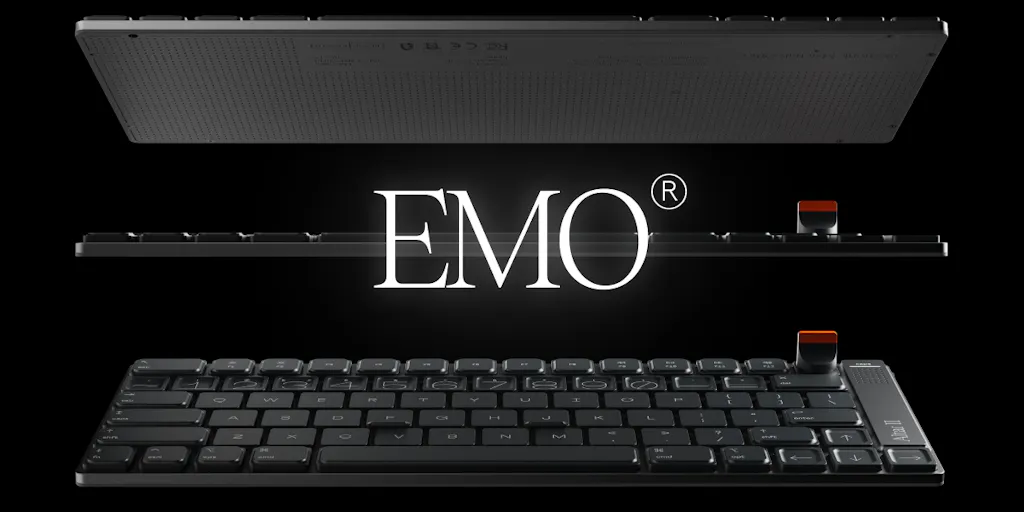
The core problem Altar II solves is deceptively simple: the Magic Keyboard is flat, lifeless, and mushy — but every mechanical alternative is a brick that ruins your posture and your desk aesthetic. Andrew Emerson, the creator, spent almost two years obsessing over this exact tradeoff. The result is a 4.75mm ultra-low-profile mechanical keyboard with 1.8mm of travel, a tactile bump, and a chassis machined from a single piece of aluminum.
That spec sheet matters less than the design philosophy behind it. Emerson isn’t selling a keyboard — he’s selling a replacement for a product that millions of Mac users have already accepted as “good enough.” He’s betting that a meaningful segment of users will pay $249 for something that feels like an upgrade rather than a compromise. That’s the same bet every DTC brand makes when it launches a premium version of a commodity category.
For cross-border sellers, the lesson is in the positioning. Emerson didn’t try to out-Magic-Keyboard Apple. He built a product that sits in the same visual language but delivers a fundamentally different experience — mechanical switches with real travel, a tactile bump you can feel, and a weight that says “precision” rather than “disposable.” That’s how you escape the race to the bottom on Amazon, where every listing is a variation on the same Chinese OEM template.
Here’s the kicker: the first version, Altar I, launched back in August 2022 and got a lukewarm 3.0 rating based on one review. The feedback was brutal — a reviewer named Jacob Waites called it “amazing looking” but complained about accidental Bluetooth pairing triggers, a flat zero-degree typing angle, and deep key insets that caused mis-typing. Instead of abandoning the product line, Emerson took that feedback and incorporated it into Altar II — the detachable dial, the pairing button placement, all of it.
That’s the difference between a brand and a one-off. Most sellers would have killed the product and moved to the next trending niche. Emerson treated the negative review as free R&D.
Why Amazon Sellers Should Care More Than Shopify Ones
If you’re running a Shopify store, you can iterate on your product page, your email flows, your ad creative — all in days. If you’re selling physical goods on Amazon Seller Central, you’re locked into a slower cycle. A product launch is a bet on months of inventory, listing optimization, and PPC spend before you see a single review. The Altar II story is a reminder that the product itself is still the highest-leverage variable in that equation. You can’t fix a bad product with a good listing — but you can build a great product that generates its own organic reviews and word-of-mouth.
The keyboard’s Product Hunt page is full of commenters asking detailed questions about travel distance, sound, and companion app functionality. That’s the kind of engagement that translates directly to Amazon review velocity — if you can get people that excited about your product before they even buy it, the post-purchase review rate goes up dramatically.
How It Differs From the Incumbents
The mechanical keyboard space is crowded. You’ve got Keychron, Logitech, Ducky, and a dozen other brands fighting for the same enthusiast dollars. Most of them compete on switch options, RGB lighting, and hot-swappable PCBs. Altar II competes on something else entirely: thinness and industrial design.
At 4.75mm, it’s barely thicker than a Magic Keyboard. The switches still have 1.8mm of travel, which Emerson says feels closer to a MacBook keyboard but with more vertical travel and a snappier feel. The USB-C housing had to be custom-made because standard ones were thicker than the keyboard itself. That’s the kind of obsessive engineering that doesn’t show up in a spec sheet but absolutely shows up in the unboxing experience.
The magnetically detachable dial is another differentiator. It’s not just a gimmick — it adds haptic feedback and a physical control surface that most keyboards don’t have. The companion app is native macOS, which means the integration is deeper than a generic Bluetooth peripheral. This is a product built for one platform, not a compromise across three.
Compare that to the typical Amazon mechanical keyboard listing: a 60% or 75% layout with hot-swappable switches, RGB, and a price point between $50 and $150. Those products are fine, but they’re not memorable. Nobody posts a photo of their new Keychron on Instagram. The Altar II’s Instagram is a gallery of design shots that make people want to own it before they’ve even typed on it.
Where the Math Breaks
Here’s where I have to be honest about the economics. The Altar II is priced at $249 with a reservation, against a $349 retail price. That’s a premium price point for a keyboard, and it’s a hard sell for most cross-border sellers who are used to competing on value. The Kickstarter launches November 10, 2026 — which means Emerson is asking people to wait over a year for a product that hasn’t been manufactured yet.
That’s a big ask. Most Amazon shoppers want their product in two days, not two years. But the reservation model — $1 locks in the price — is a clever way to build a pre-order list and gauge demand before committing to a manufacturing run. It’s essentially a crowd-funded MOQ test.
The math works if Emerson can convert even a small percentage of the Mac-using professional market. But the risk is real: a 4.75mm keyboard with 1.8mm of travel is a niche product within a niche market. The people who want a true mechanical experience might not want to compromise on travel distance. The people who want a Magic Keyboard replacement might not want to pay $249. That’s the classic premium-product trap.
What Cross-Border Sellers Can Borrow From This Launch
The Altar II launch is a masterclass in several things that translate directly to cross-border e-commerce:
1. Design as a moat. You can copy a spec sheet, but you can’t copy an obsession with a single piece of CNC-machined aluminum. The custom USB-C housing alone — because standard ones were thicker than the keyboard — is the kind of detail that generates press coverage and social media shares. When was the last time your product had a detail worth sharing?
2. Community feedback as R&D. Emerson explicitly cited feedback from Altar I as the reason for Altar II’s improvements. That’s not just good product management — it’s a marketing story. The launch page is full of comments from people who remember the first version and are curious about the second. That’s brand loyalty built on listening, not on discounts.
3. Scarcity and pre-orders. The $1 reservation to lock in a $249 price against a $349 retail is a classic scarcity play. It creates urgency without requiring a full commitment. For cross-border sellers, this is a model worth testing — even on Amazon, where pre-orders are possible through the Launchpad program or a brand store.
4. Platform-specific optimization. Altar II is built for Mac, with a native macOS companion app. That’s a deliberate choice to own a niche rather than serve everyone poorly. The same logic applies to Amazon: instead of trying to rank for every keyword in your category, pick a specific audience and dominate it.
The Tradeoff Nobody Mentions
There’s a comment on the launch page from a reviewer who asked about the companion app: “how much of the dial and haptic customization lives in app versus firmware? Asking because I want to know if my setup carries over on a second Mac or if I start from scratch each time.” That’s a great question, and Emerson’s answer — that the closest typing comparison is a MacBook keyboard with more travel — reveals the fundamental tension.
This is not a keyboard for mechanical keyboard enthusiasts. It’s a keyboard for people who want the idea of a mechanical keyboard without the bulk. That’s a much bigger market, but it’s also a market that’s harder to reach through traditional mechanical keyboard channels. You’re not going to find Altar II on Drop or Mechanical Keyboards. You’re going to find it on Instagram and Product Hunt.
That’s the same challenge every DTC brand faces: how do you reach an audience that doesn’t know they want your product yet? The answer is content, community, and a story that makes people feel like they’re part of something. Altar II isn’t just a keyboard — it’s a statement about what Apple should have built.
Where My Judgment Says It Falls Short
I want to be clear: I think this is a beautiful product, and I respect the engineering. But there are three places where I’d push back.
First, the ergonomics. The Altar I review specifically called out the flat zero-degree typing angle as a source of hand soreness after a full day of typing. Emerson said he incorporated feedback into Altar II, but there’s no mention of a typing angle adjustment in the new specs. At 4.75mm, this keyboard is flat by definition. That’s a real problem for anyone who types for a living — and that’s the core audience for a $249 keyboard.
Second, the timeline. A Kickstarter launching in November 2026 means a year of waiting. In the hardware world, that’s an eternity. Competitors could release a similar product in that window, or Apple could update the Magic Keyboard with better specs. The reservation model de-risks the launch, but it also creates a long period where customer enthusiasm can fade.
Third, the price. $249 is a premium price, and $349 retail is luxury territory. For cross-border sellers, this is a reminder that premium pricing requires premium everything else — customer service, unboxing, documentation, and post-purchase support. If Emerson ships a keyboard with a single defect, the backlash will be brutal. The margin is there, but so is the risk.
What the Review Ecosystem Tells Us
The Altar I has a 3.0 rating based on one review. That’s a brutal score, and it’s a reminder that on Amazon, a single negative review can tank your conversion rate. But on Product Hunt, that same negative review became a roadmap for improvement. The difference is the platform. Amazon reviews are final; Product Hunt reviews are a conversation.
For cross-border sellers, the lesson is to diversify your review channels. Don’t rely solely on Amazon. Build a community on Discord, run a Product Hunt launch, and engage with early adopters on X. The feedback you get there is more honest — and more actionable — than what you’ll get from a star rating.
What I’d Watch / Test Next
If I were running a cross-border operation, here’s what I’d do this week based on this launch:
1. Study the Altar II page for your next product brief. The way Emerson frames the problem — “the keyboard I wish Apple made” — is a template you can apply to any category. What’s the product you wish Amazon made? That’s your next SKU.
2. Test a reservation model on your own store. Whether you’re on Shopify or Etsy, a $1 deposit to lock in a launch discount is a low-risk way to gauge demand before you commit to a manufacturing run. You can do this with a simple app or a custom landing page.
3. Analyze the comment section for product ideas. The questions people ask on Product Hunt — about ISO format, companion app functionality, and sound — are the same questions your customers will ask. If you can answer them before launch, you’re ahead of the game.
4. Watch the Kickstarter. When it launches on November 10, 2026, pay attention to the funding velocity and the comments. That’s real-time market research on a premium hardware product. If it funds quickly, it’s a signal that the premium design-led niche is growing. If it stalls, it’s a warning about price sensitivity in a high-inflation environment.
5. Steal the Instagram playbook. The Electronic Materials Office® Instagram is a gallery of design shots that make people want to own the product. For your own brand, invest in photography that shows your product in the best possible light — not just on a white background, but in a lifestyle context that makes people feel something.
The Altar II is a reminder that in cross-border e-commerce, the product is still the strategy. You can optimize your listings, automate your email flows, and scale your ad spend — but none of that matters if the product doesn’t make someone feel something. Emerson built a keyboard that people argue about in public. That’s worth more than any PPC campaign.


