The Desk Pet That Won’t Ship Your Parcels — But Might Save Your Ops Team From Burning Out
Cross-border e-commerce operators spend their days staring at dashboards that only ever tell them one of two things: spend more, or ship faster. What almost none of these dashboards do is manage the human sitting in front of them. That is why Doco, a small desktop companion built by Vatsal Upadhyay, caught my attention this week — not because it will move a single unit of inventory, but because it is the clearest signal yet that the “ambient AI companion” category is maturing into something operators should be watching for two very different reasons: as a window into where consumer hardware is heading, and as a mirror for how we manage our own remote teams.
What Doco Actually Is, Stripped of the Launch-Day Gloss
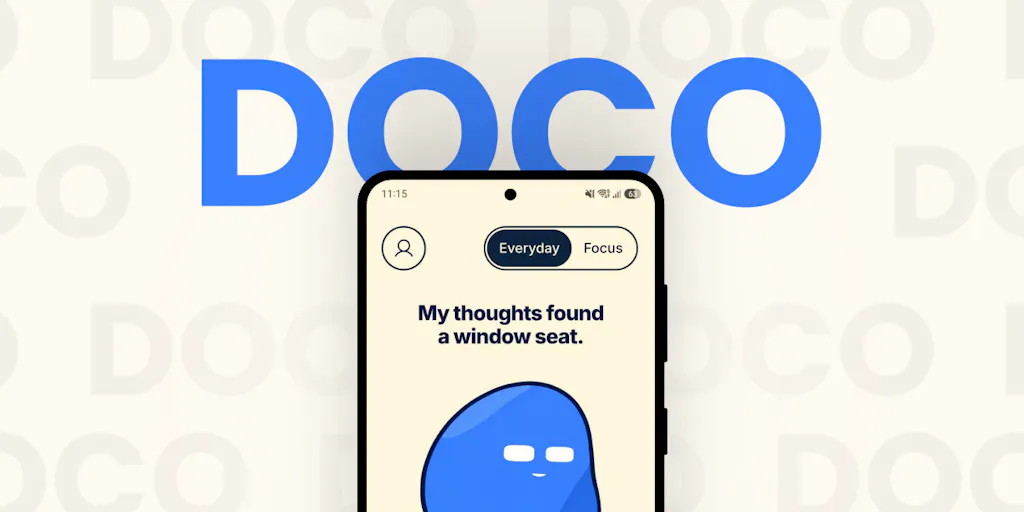
Let me get the facts straight before I editorialize. Doco is a digital pet that lives on your desk, watches you only when you explicitly permit it, and picks a song from your Spotify playlist based on the time of day and your current mood. It has two modes: an Everyday mode that is a “chill companion,” and a Focus mode that “unleashes a boss persona that will happily roast you if you waste time.” The maker is refreshingly honest about the origin story — he built it “purely because I wanted it, not to solve a massive problem or serve any grand purpose.”
That last sentence is the most interesting thing on the page. In a Product Hunt feed clogged with AI wrappers pretending to be category-defining infrastructure, a founder saying “I wanted this, so I made it” is almost a subversive act. And the community responded in kind: commenters latched onto the privacy angle (“love that it only looks when you say so”), the personality contrast (“chill companion by day, sassy boss in Focus mode”), and the mascot design. One commenter from minimalist phone joined the waitlist and called the mascot “extremely cute.”
But there are real gaps in the product as described. When asked how Focus mode detects time-wasting, the maker did not answer that specific question in the thread. When another commenter asked whether Focus mode “learns when to stay quiet,” the maker answered plainly: “Not yet — right now Focus mode is a fixed boss persona you turn on, it won’t read the room on its own.” And on music discovery, the maker clarified that Doco “mostly stays within familiar artists” — it pulls from your Spotify top tracks, recent listening, and top artists, then looks for additional songs from those artists. It does not seek out completely new artists. It also avoids recent repeats when alternatives exist.
So: no adaptive behavior, no true novelty in recommendations, no disclosed pricing, no disclosed ship date beyond a waitlist. What Doco does have is a coherent point of view about what a companion should feel like — and that is worth more than most feature lists.
Why Amazon sellers should care more than Shopify ones
Here is the counterintuitive take. If you run a Shopify store, Doco is a curiosity. If you run an Amazon FBA operation, it is a preview of a customer segment you are about to be asked to sell into.
Think about the physical form factor implied here. A desk pet that watches you, plays audio, and has a mascot with personality is a consumer hardware product. The moment this category produces a shippable device with a decent bill of materials, it lands in the same supply chain you already navigate: Shenzhen tooling, FCC and CE certification, lithium battery shipping restrictions, and the same Q4 fulfillment crush that eats your margin every year. The sellers who understand this category early will be the ones who can source the accessories — skins, stands, charging docks, carrying cases — before the OEMs bundle them. That is the Amazon playbook: let someone else validate demand, then own the long tail of attachments.
Shopify DTC operators, by contrast, should care about Doco for a different reason: it is a retention mechanic dressed as a toy. The two-mode personality switch is essentially a gamified habit loop. If you sell anything with a daily-use ritual — supplements, skincare, coffee, pet food — the “chill by day, boss when you slack” emotional arc is a template for your post-purchase email flows. Your Klaviyo sequences are already trying to do this. Doco just makes the mechanic visible.
The Real Product Category Doco Is Competing In
Doco does not compete with productivity apps. It competes with the ambient presence layer: the thing on your desk that changes how you feel about working. That puts it in conversation with a few very different incumbents, and the comparison is instructive for anyone building consumer-facing products.
The closest functional analog is a Pomodoro timer — but Doco’s Focus mode adds social pressure rather than just a countdown. The closest emotional analog is a Tamagotchi, but with a Spotify integration and a permission-based camera. The closest commercial analog is probably the wave of AI desktop companions that have launched over the past eighteen months, most of which fail because they try to be assistants rather than companions. An assistant is judged on task completion. A companion is judged on whether you miss it when it is gone. Doco is clearly optimizing for the second metric, and that is the right call.
Where the comparison gets uncomfortable is on the music side. Doco’s recommendation logic is explicitly conservative — familiar artists, adjacent tracks, no repeats. That is a defensible product decision for a companion, because a companion that suddenly plays death metal at 9 a.m. is a bad companion. But it means Doco is not competing with Spotify’s Discover Weekly on discovery. It is competing on curation timing: the right song from the right artist at the right moment. That is a much narrower wedge, and it is the kind of wedge that either becomes a feature inside Spotify or dies as a standalone.
Where the math breaks
Let me be blunt about the unit economics, because this is where most companion hardware dies. A desk pet needs a screen or at least an expressive display, a microphone, a camera, a speaker, a Wi-Fi or Bluetooth radio, and a battery or a permanent tether. Even at aggressive Shenzhen pricing, that bill of materials lands somewhere in the $25–$60 range before assembly, packaging, certification, and freight. Add a 30% Amazon referral fee, FBA fulfillment fees, and a 15–20% return rate typical of consumer electronics, and you need a retail price north of $120 to make the math work — probably closer to $150.
At $150, you are no longer an impulse buy. You are competing with an Echo Show or a used iPad. That is the trap. The product has to justify its price on emotional grounds, not functional ones, and emotional justification is the hardest thing to scale in paid acquisition. A TikTok Shop creator demo can absolutely sell this — the “boss roasts you for slacking” clip is made for short-form video. But paid Meta acquisition on a $150 emotional hardware product with no utility hook is a graveyard.
The maker has not disclosed pricing or a ship date, so I am speculating on the BOM. But the structural math does not change with better sourcing. This is why most desk companions end up as Kickstarter projects that ship late and never restock.
What Cross-Border Operators Should Steal From This Launch
Forget the product for a second. The launch itself is a masterclass in a specific skill that most cross-border sellers are terrible at: building a waitlist around a personality, not a feature set.
Look at what the maker did. He led with the emotional contrast — chill companion versus roasting boss. He answered every comment personally, including the ones that exposed limitations. When a commenter asked about music discovery, he gave a detailed, honest answer about familiar artists and repeat avoidance. When another asked about adaptive behavior, he said “not yet” and added it to a list. That is not just good community management. That is free product research with a public paper trail, and it builds the exact kind of audience that converts on launch day.
Cross-border sellers can borrow three specific moves here:
First, lead with the emotional contrast, not the spec sheet. Your Amazon listing has five bullet points and they are almost certainly feature-dump. Rewrite the first one as a before-and-after emotional state. “Chill by day, boss when you slack” is a better bullet than “Two operating modes.”
Second, answer the hard questions publicly. The maker did not dodge the “does it learn when to stay quiet” question. He said no. That builds more trust than a vague “coming soon.” If you are launching on Amazon Seller Central with a new brand, your Q&A section is your public trust ledger. Seed it with real answers to real objections, not marketing copy.
Third, use the waitlist as a demand test before you commit to inventory. Doco is still gathering waitlist signups. That is the correct order of operations. Too many FBA sellers commit to a 5,000-unit production run before they have proof that anyone wants the thing. A simple landing page with an email capture costs you a domain and a weekend. A container of unsold inventory costs you a year.
Why TikTok Shop operators should study the mascot, not the AI
The single most-upvoted emotional beat in the entire comment thread was about the mascot. “Extremely cute mascot.” That is not a coincidence. In physical consumer products, the character design is the product. The AI is a feature. The camera permission logic is a feature. The mascot is the thing people form a relationship with.
If you sell on TikTok Shop or Temu, you already know this instinctively — the thumbnail wins or loses the scroll. But apply it deeper. Your packaging, your unboxing insert, your thank-you card, your customer service avatar: all of these are mascot opportunities. A coherent character across touchpoints is worth more than a marginal improvement in product specs. Doco’s maker understood this well enough that a commenter joined the waitlist on the strength of the mascot alone.
Where My Judgment Says Doco Falls Short
I want to be fair to a project that is explicitly early-stage, but I also want to be useful to operators who might be tempted to build in this space.
The biggest gap is the missing adaptive layer. Focus mode is a fixed persona. It does not know when you are in a flow state and should be left alone. It does not know when you have been grinding for three hours and need a break. It does not know the difference between productive silence and procrastination. All of those are solvable with the inputs the device already has — camera, microphone, app activity — but none of them are solved today. Until they are, Doco is a toy with a timer, not a companion with judgment.
The second gap is the music recommendation ceiling. Familiar-artist-only is safe, but it caps the emotional payoff. The magic moment for a companion is when it plays something you did not know you wanted. Doco explicitly does not do that. The maker’s honesty about this is admirable, but it is also a product limitation, not a philosophy.
The third gap is the unanswered question about how Focus mode detects time-wasting. That is the core mechanic of the product, and it is undefined in the thread. If it is manual — you tell it you are slacking — the roast loses its bite. If it is camera-based, you have a privacy story to manage. If it is app-activity-based, you have a permissions and platform-integration problem on every OS. This is not a nitpick. It is the make-or-break technical question, and it is still open.
Finally, there is no disclosed business model. No pricing, no subscription, no hardware preorder. A waitlist with no monetization path is a hobby. That is fine for a passion project, but operators evaluating this space should not mistake enthusiasm for traction.
What I’d Watch / Test Next
If you run a cross-border brand, here is what I would actually do this week — none of it requires buying a Doco.
First, audit your own post-purchase communication for a personality arc. Pull your last three Klaviyo or Shopify Email flows and ask a simple question: does the voice change based on what the customer is doing? If every email sounds the same regardless of whether the customer just bought, just reordered, or just filed a return, you are leaving retention on the table. Doco’s two-mode design is a reminder that tone should be contextual.
Second, if you are considering any consumer hardware play — smart accessories, desk gadgets, pet tech — build a waitlist before you build a purchase order. Use a simple Shopify landing page or a Carrd one-pager. Drive traffic with a single short-form video that leads with the emotional contrast, not the spec list. Measure email capture rate, not conversion. If you cannot get 500 emails in two weeks, you cannot get 5,000 units sold.
Third, watch whether Doco ships a device and at what price. That single data point will tell you more about the viability of the ambient companion category than any analyst report. If it lands under $99, the category has legs. If it lands over $149 with no adaptive behavior, it is a beautiful prototype and nothing more.
And fourth, steal the honesty. The maker told a commenter “not yet” and put the feature on a list. That is a better brand-building move than any launch-day press release. Your customers can smell a vague roadmap from a mile away. Tell them what the product does not do, and they will trust you about what it does.