The Real Bottleneck in Cross-Border E-Commerce Isn’t Traffic — It’s Video Throughput
Ask any Amazon FBA brand owner or TikTok Shop operator where their content pipeline breaks, and you’ll hear the same story: they know video converts, they know A+ content and short-form demos move units, and they still can’t produce enough of it. A single localized product demo can eat three people and a week. That’s the gap Clueso is now trying to close with an agent-native workflow — and it’s worth paying attention to, because the underlying shift (video as a callable tool inside an AI agent, not a destination app) will reshape how cross-border sellers staff creative in 2026.
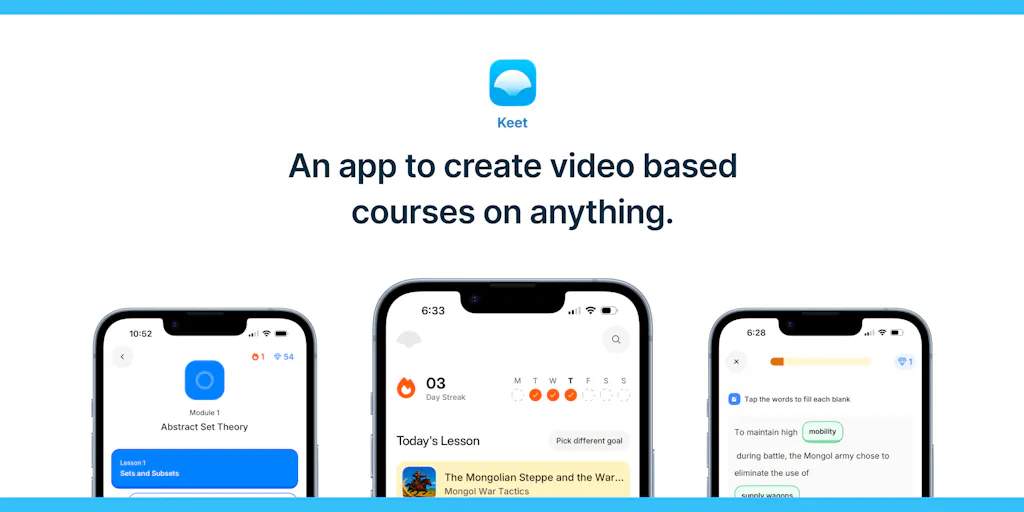
Clueso is the product of the same-named company, Clueso, which first launched on Product Hunt on July 8th, 2025 and now sits at a 4.9 rating across 24 reviews. Its original pitch was simple: turn rough screen recordings into polished product videos in minutes with AI. The new launch, Clueso MCP, pushes that idea one layer deeper — you can now create and edit videos directly from Claude, ChatGPT, Cursor, or any MCP-compatible agent. For operators running lean teams across time zones, that’s not a novelty. It’s a structural change in who can produce video, and how fast.
What Clueso MCP Actually Solves (And Why Screen Recording Was Never the Real Problem)
The original Clueso bet was that the hard part of video wasn’t editing — it was the friction between having raw material and having a finished asset. That framing was validated by the company’s own research: growth lead Ashutosh Raj wrote that Clueso spoke to 100+ people about why they avoid making product videos, and the answer surprised them. The pattern wasn’t a lack of ideas or even a lack of tools. It was the accumulated drag of scripting, storyboarding, voiceover sync, branding, and the endless regeneration loop.
Clueso MCP attacks that drag from a different angle. Instead of opening a video editor, you give an agent a prompt plus whatever material you have — a screen recording, deck, document, URL, Figma file, raw footage, a reference video, or just an idea. The agent plans the video, creates scenes, writes the script, generates AI voiceover, adds music, motion graphics, captions and animations, applies branding, and edits it together. The launch video itself was made entirely with Clueso MCP, per co-founder Neel Balar.
The part that matters for sellers is the control layer. Balar explicitly frames the differentiation: “A lot of AI video tools feel like black boxes: you prompt them, get a finished clip back, and if something isn’t quite right, your main option is to keep regenerating.” Clueso keeps a full video editor underneath the agent, so everything it generates remains editable — either by hand or by continuing to chat with the agent.
Why Amazon sellers should care more than Shopify ones
Here’s my read: this matters more to Amazon FBA brand owners than to pure Shopify DTC operators, and the reason is structural.
Amazon sellers live inside a marketplace where video is increasingly a ranking and conversion input — brand store videos, A+ content modules, Sponsored Brands video, and now the short-form feeds Amazon keeps testing. But Amazon sellers also tend to run thinner creative teams than DTC brands with in-house content studios. A Shopify store can iterate landing page video endlessly because it owns the surface. An Amazon seller needs video variants for multiple ASINs, multiple marketplaces, and multiple languages — and every one of those variants has to survive a compliance review that a DTC landing page never faces.
That’s exactly the workload an MCP-native video tool is built for. If Clueso can be wired into a workflow where a product feed triggers a script, a script triggers a localized voiceover, and the finished asset drops into an Amazon Seller Central upload queue, the marginal cost of the tenth video collapses toward the marginal cost of the first. That’s the entire game in marketplace content.
Where the math breaks
The counterargument is real, and I want to state it plainly: AI-generated video is still weakest exactly where cross-border sellers need it most — product accuracy. A demo video that shows the wrong colorway, the wrong plug type, or a feature that doesn’t exist in the SKU is worse than no video, because it drives returns and A-to-z claims. Clueso’s deterministic feedback loop (the agent gets actual feedback every time it makes an edit, so it knows if it puts text on top of text or makes text too small) is a clever engineering answer to a design problem, but it doesn’t solve factual accuracy against your catalog. You still need a human in the loop checking the SKU against the footage.
How It Differs From the Incumbents You’re Probably Already Paying For
Let’s be honest about the competitive set, because “AI video tool” is now a crowded shelf and most sellers have already been burned by at least one.
The obvious comparison is Canva — which most cross-border teams already use for thumbnails, ad creative, and basic video assembly. Canva’s strength is that it’s a design surface everyone on the team already knows. Its weakness is that it’s still fundamentally manual: you drag, you drop, you export. Clueso’s pitch is that you don’t open the editor at all unless you want to.
The second comparison is Descript, which owns the “edit video by editing text” niche and has become a default for podcast and screen-recording workflows. Descript is excellent at transcript-driven editing, but it’s still a destination app with a human driving every cut. It’s not agent-callable in the way Clueso MCP is.
The third is the wave of generative video tools — Runway, Synthesia, and the various avatar-driven platforms. These are strong at synthetic footage and talking-head content, and Synthesia in particular has real traction in L&D and internal training. But they’re not built around the seller’s actual raw material: a screen recording of a product, a deck, a Figma file, a URL. Clueso’s input surface is broader and more operator-shaped.
Where Clueso genuinely differentiates, per the maker’s own breakdown, is in the MCP architecture itself. Prajwal Prakash, also a maker, laid out four patterns he thinks will be widely adopted: code mode (the MCP exposes a tool to run scripts using the rest of its tools), multi-frame feedback (the AI client can visualize multiple frames in a call-sheet format to understand motion), deterministic feedback, and design guidelines as a tool. That last one is the sleeper — instead of relying on resources, Clueso exposes a dedicated tool call so the AI client can make informed decisions about producing good videos, and it’s overrideable.
For an operator, the practical translation is this: Clueso is trying to be the video layer of your agent stack, not another tab in your browser. Whether that wins depends on whether your team actually lives in an agent.
The reviews tell you who it’s really for
Scan the review themes and a clear picture emerges: demo video creation (15 mentions), ease of use (9), voiceover for presentations (6), screen recording (4), intelligent automation (3), product tutorials (3). One reviewer, Kishan Kumar, wrote that a task that previously took 3–4 people across 5–7 days now takes one person half an hour. Fabian Schäfer noted Clueso turned messy screen recordings into studio-grade videos and docs “before my coffee got cold,” in under 15 minutes, with auto-transcription, AI voiceovers, zooms, captions, branded intros, and step-by-step article output.
That’s a product built for onboarding, tutorials, and demos — not for cinematic brand films. Cross-border sellers should read that as a signal about fit: if your video need is product explainers, marketplace tutorials, and localized onboarding content, this is squarely in your lane. If you need a 30-second TikTok hook with a creator, this is not that.
What Cross-Border Sellers Can Borrow From This Launch
Even if you never touch Clueso, there are three transferable lessons in this launch that apply to any operator building a content stack.
First: stop treating video as a project and start treating it as a function. The most interesting line in the entire launch thread came from Balar’s reply to a commenter: “Because Clueso works through MCP, you can connect it with tools like Figma, Slack, Linear, social platforms, your CRM, support tools and more and make video creation, editing and distribution part of a larger automated workflow.” That’s the operating model shift. A feature ships and becomes a launch video. A finished design becomes an explainer. A completed video automatically moves to the next step. If your content calendar is still a spreadsheet of one-off projects, you’re paying a coordination tax that competitors are about to stop paying.
Second: the input surface matters more than the output quality. Most sellers evaluate video tools on how good the final render looks. The better question is what you can feed it. Clueso accepts screen recordings, decks, documents, URLs, Figma files, raw footage, reference videos, or just an idea. Every additional accepted input is one less manual conversion step in your pipeline. When you’re evaluating any creative tool — video, image, copy — weight input flexibility heavily.
Third: agent-callability is the new integration checkbox. Balar noted that his team now uses MCPs for most of their tools and that it’s become a factor they evaluate any new tool on. That’s a leading indicator. Within a year, “does it have an MCP” will be as standard a procurement question as “does it have an API” was in 2015. Sellers building a stack should start asking vendors now.
The discount is a signal, not a strategy
The launch offer is a 50% discount on all plans for the first month to first-time subscribers, using code PHXCLUESO50 at checkout, valid until September 25 at 11:59 pm PT. Connect the MCP from the Clueso MCP page. I’d note that a first-month discount is a customer acquisition tactic, not a pricing signal — the real cost question is what your per-video marginal cost looks like at month six, once you’ve built the workflow. Model it before you commit a team to it.
Where My Judgment Says This Falls Short
I’ll be direct about the gaps, because a launch thread is not a due diligence memo.
The accuracy problem is unsolved. Nothing in the launch addresses how Clueso verifies that the video it generates matches your actual SKU, your actual pricing, or your actual compliance requirements. For a US-only DTC brand, that’s an inconvenience. For a cross-border seller shipping into the EU, UK, or Japan, a video that misstates a certification or a voltage rating is a regulatory exposure. You will still need a human reviewer, and that reviewer needs product knowledge, not just editing skill.
The “any kind of video” claim deserves skepticism. The launch lists launch and marketing videos, product demos, walkthroughs, tutorials, explainers, social content, complex motion graphics, animated sequences, and logo animations. That’s a very wide net. In my experience, tools that claim to do everything well usually do two or three things well and the rest adequately. The review data backs the demo/tutorial/onboarding use case strongly; it says nothing about motion graphics or logo animation quality. Test the specific format you need before you buy.
Ecosystem lock-in is a real risk. If your video workflow becomes an MCP call inside Claude or Cursor, your content pipeline now depends on two vendors: Clueso and whichever agent harness you’ve standardized on. That’s a fragility most sellers haven’t priced in. The mitigation is keeping your raw assets and final exports in your own storage, not just inside Clueso’s project files.
The pricing is not disclosed in the launch material. I can’t tell you what this costs at scale, and neither can anyone reading the Product Hunt page. That’s a gap for anyone doing serious budget planning.
A note on the “beta features” caveat
The AI-generated review summary flags that “some beta features still need refinement.” That’s the kind of line that gets glossed over and shouldn’t be. MCP is a young protocol and agent-driven editing is younger still. If you’re an early adopter, budget for rough edges and keep a manual fallback path for anything deadline-critical.
What I’d Watch / Test Next
Here’s what I’d actually do this week if I ran a cross-border brand with more than 20 SKUs.
Run a 10-video pilot against one product line. Pick your highest-return ASIN, feed Clueso the existing screen recordings and product assets, and generate ten variants — different lengths, different hooks, different languages if you sell multi-market. Track time-to-publish and human review hours per video. That number, not the demo quality, tells you whether this belongs in your stack.
Wire one trigger end-to-end. Connect Clueso MCP to a single upstream event — a new product launch in your Shopify admin, a Slack message, a Linear ticket — and see if the video actually lands where you need it. The value of MCP is workflow, not generation. If you can’t close the loop, you’ve bought a fancier editor.
Pressure-test accuracy on a regulated SKU. Take a product with certifications, voltage requirements, or marketplace-specific claims and see what the agent produces without hand-holding. This is where you’ll learn whether you need a compliance reviewer in the loop permanently or just at launch.
Ask the vendor the pricing question directly. The launch doesn’t disclose it, and your unit economics depend on it. Get the number before the discount window closes on September 25.
The broader bet here is that video production is about to stop being a bottleneck and start being a background process. Clueso MCP is one of the first credible attempts to make that real for operators rather than for agencies. Whether it wins or gets absorbed into a larger agent platform, the direction is set — and the sellers who build the workflow now will have a content moat their competitors won’t catch for a year.