Why a Token-Compressing Proxy Is the Most Cross-Border Thing You’ll See This Month
Every dollar you waste on AI tooling is a dollar that isn’t going into inventory, ads, or a marginally better unboxing experience. For cross-border operators, margin is not a metric—it’s survival. We obsess over freight costs,仓储 fees, and the difference between a 30-day and 45-day payment term, yet we treat AI spend like a utility bill we never audit. That’s a mistake. The launch of Framer AI Agents on Product Hunt isn’t just another dev-tool flex. It’s a case study in how to think about the hidden tax on every AI interaction—the redundant, bloated payloads that ride along with every API call. If you’re running a DTC brand on Shopify or juggling Amazon Seller Central reports, you’re paying for that bloat, whether you see it on an invoice or not. This essay breaks down what the product actually does, why its philosophy matters for your operations, and what you can steal from it this week.
The Problem Isn’t Tokens—It’s the Garbage You’re Paying For
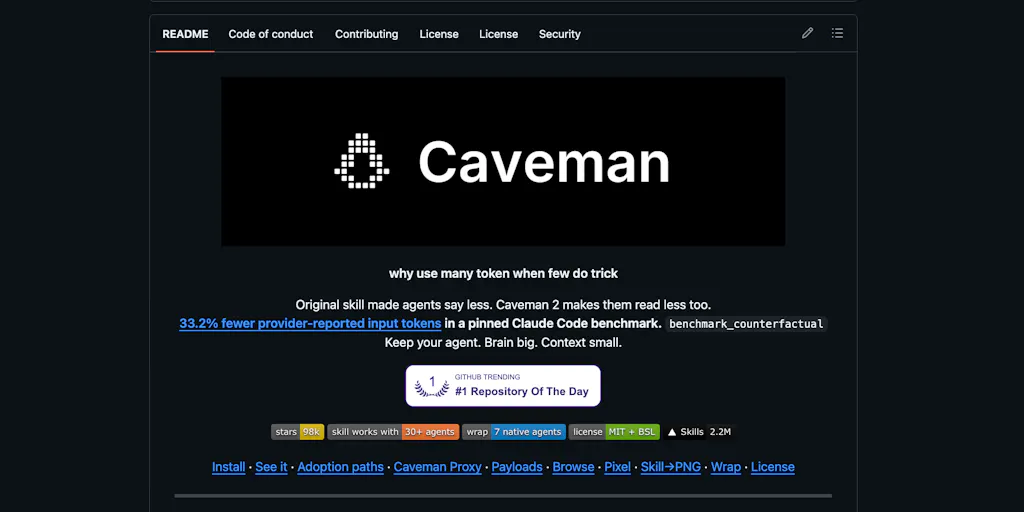
Let’s get the product recap out of the way, because the story is genuinely good. The maker, Julius Brussee, started with a joke that became a phenomenon: a skill that made Claude Code respond like a caveman. The punchline was that it saved tokens—19 tokens instead of 69 for a common coding instruction. That gag turned into 97,000 GitHub stars and a #1 Hacker News post. But the real insight wasn’t the humor; it was the audit. When Brussee actually looked at what was crossing the wire, he found that the “answers” were a rounding error. The bulk of the payload was tool schemas, file contents, old history, and 300 lines of npm install noise. Your agent talked like a caveman but read like a lawyer.
This is the cross-border problem in miniature. Think about your own stack. When you ask an AI to draft a return policy for a German marketplace or summarize a competitor’s ad copy on TikTok Shop, the model isn’t just processing your prompt. It’s re-sending the entire context window—the product feed, the previous chat history, the cached images, the irrelevant logs. You’re paying for the legal fine print of the conversation, not the answer.
The solution, caveman claude, is a local proxy that sits between your agent and the provider. It supports Claude Code, Codex, Gemini CLI, Aider, opencode, Hermes, and OpenClaw. It never touches your config, and subscription OAuth passes through byte-exact. The engine sniffs each payload type and routes it to a different compressor: logs keep errors and stack traces but lose progress spam; code keeps imports and signatures via tree-sitter; JSON keeps structure plus error subtrees. The key safety feature is that originals are written to a content-addressed store on your disk before anything goes upstream, so the agent can pull the real bytes back with one tool call. If a parse fails or the result is larger, the bytes pass through untouched.
Why Amazon Sellers Should Care More Than Shopify Ones
Shopify merchants live in a world of clean APIs and predictable webhooks. Amazon sellers live in a world of legacy XML feeds, throttled MWS endpoints, and flat files that haven’t changed since 2012. Your AI tooling has to handle a lot of junk just to get a simple answer about a buy box percentage or a stranded inventory report. The caveman approach—stripping out the noise before it hits the model—isn’t a luxury for you; it’s a necessity. If you’re using AI to parse a 90-day settlement report, the difference between 55,000 tokens and 11,000 tokens isn’t just cost. It’s the difference between a task that completes in seconds and one that times out or hits a rate limit. The proxy’s pixel mode, which renders dense text to PNG and uses image tokens instead of text tokens, is a hack that would specifically benefit anyone feeding large, formatted reports to a model. A 63.7k-char minified tool catalog plus a 93k-char log went from ~55k estimated text tokens to ~11k image tokens. That’s the difference between a quarterly inventory audit and a monthly one.
How This Differs from the Incumbents
The existing options for managing AI cost are blunt instruments. You have prompt engineering—which requires discipline and often degrades output quality. You have model switching—like moving from GPT-4 to a cheaper model, which sacrifices reasoning capability. And you have caching layers, which help with repeated calls but do nothing for the initial bloat. The proxy approach is different because it’s lossy by design, but with guardrails. It’s not just stripping text; it’s understanding the structure of the payload and applying a targeted compressor. This is closer to what Cloudflare does for web traffic—optimizing images and minifying code—but for the AI conversation layer.
Where this gets interesting for operators is the honesty of the benchmark. Brussee published a pinned 54-run Claude Code benchmark showing 33.2% fewer provider-reported input tokens and 18⁄18 exact-answer checks. He’s careful to label local measurements as “inferred” because a local tokenizer is an estimate. There are no “up to 90%!” claims anywhere and no verified production numbers yet. In a market where every AI tool screams about 10x improvements, that restraint is refreshing—and it’s a lesson for anyone reading vendor claims about ad platforms or logistics partners.
Where the Math Breaks
Let’s be honest about the limits. The compression isn’t free. On sparse code, the PNG costs more than the text, so the gate refuses and prints why. That’s a smart fail-safe, but it means the tool isn’t a universal win. For cross-border sellers, the analogy is to freight consolidation. You can save money by consolidating LCL shipments, but if you consolidate the wrong SKUs, you pay for the whole container and miss the sales window. The proxy has the same risk profile. If you’re using it for a simple, high-frequency task like a status check, the overhead of the proxy itself might not be worth it. The tool also requires a local environment, which is a non-starter for teams that have moved their entire ops stack to the cloud. If your AI agents run on a hosted platform, you can’t install a local proxy. That’s a significant limitation for a lot of enterprise setups.
What Cross-Border Sellers Can Borrow from This
The core lesson isn’t the tool itself—it’s the philosophy of auditing the wire. Most operators have no idea what they’re actually paying for in their AI stack. They see a monthly invoice from OpenAI or Anthropic and assume it’s a fixed cost of doing business. The caveman story proves that a significant chunk of that spend is waste. The same audit applies to other areas of your business.
The “Caveman” Audit for Your Ops Stack
Take your Klaviyo flows. Are you sending a 5-image email when a single hero shot would convert better? Are your Amazon product listings loaded with keyword-stuffed backend fields that are actually hurting your relevance score? The caveman approach—strip it down to the essential signal, keep the error handling, and log the rest—is a mental model for how to run lean operations. It’s the difference between a brand that sends a 10-email welcome sequence and one that sends three high-impact emails that drive the same revenue.
The proxy’s safety mechanism—writing originals to a content-addressed store before compression—is also a lesson in risk management. When you’re expanding to a new marketplace like Temu or SHEIN, you’re often asked to provide data in formats that feel lossy. You might be tempted to trim your product data to hit a character limit. The caveman approach says: keep the original, compress the transmission, and have a way to pull the real bytes back. That’s a risk management strategy, not just a cost-saving one.
Where I’d Push Back
The launch is impressive, but it’s a dev tool at heart. The target audience is individual developers and small teams who are comfortable running a local proxy and debugging a CLI. That’s a narrow slice of the market. For a cross-border operator running a 20-person team, this tool is not something you’d deploy this quarter. The setup cost and the learning curve are too high. You’d be better served by a managed service that does the same thing, and that doesn’t exist yet.
There’s also a question of trust. The maker says the engine is BSL-1.1 and flips to Apache-2.0 within four years, with self-hosting free including production. That’s a reasonable license, but it’s not MIT. The skill itself is MIT, but the engine is not. For a business, that means you’re relying on a single maintainer’s roadmap. If he gets bored or moves on, you’re stuck with a tool that might not be updated for new model APIs. That’s a real risk for a piece of infrastructure that sits in your critical path.
Finally, the “pixel mode” trick is clever but feels like a hack rather than a solution. It works because image tokens are cheaper than text tokens for dense content, but it’s gaming the pricing model. If OpenAI or Anthropic ever rebalances their pricing—and they will—this optimization could evaporate overnight. Building your cost strategy around a pricing arbitrage is fragile.
What I’d Watch / Test Next
If you’re intrigued by the cost-saving potential, here’s what I’d do this week, without adopting the tool wholesale:
Audit your own AI spend. Pull your last three invoices from OpenAI, Anthropic, or whatever you use. Look at the token counts. If you’re using AI for any repetitive task—summarizing reviews, drafting listing copy, parsing returns data—ask yourself if you’re sending the entire history every time. You probably are. That’s your first optimization.
Test the compression concept manually. Take a large, formatted document—a supplier contract, a freight quote, a marketplace fee schedule—and run it through a text summarizer before feeding it to your AI. See if the output quality changes. The caveman benchmark suggests you can lose a lot of noise without losing signal. Your mileage will vary, but the experiment is cheap.
Watch the project’s repo. The maker has committed to publishing method and per-case results. If the project gains traction, you’ll see real-world benchmarks that go beyond the 54-run test. That will tell you if the 33.2% reduction is replicable or if it’s a best-case scenario.
For Shopify operators specifically: look at your app stack. If you’re using AI-powered apps for product descriptions or customer support, check if they’re charging you per token or per action. If it’s per token, the bloat is baked into your costs. Consider switching to a flat-rate tool or negotiating a custom plan.
The bottom line is that the caveman launch is a reminder that the AI gold rush has a hidden cost structure. The smart operators aren’t the ones using the most AI—they’re the ones using it most efficiently. This tool is a glimpse of that future, even if the implementation is too technical for most of us to adopt today. The principle, though, is universal: strip the noise, keep the signal, and always keep the original. That’s a strategy for AI, for logistics, and for your entire cross-border playbook.


